
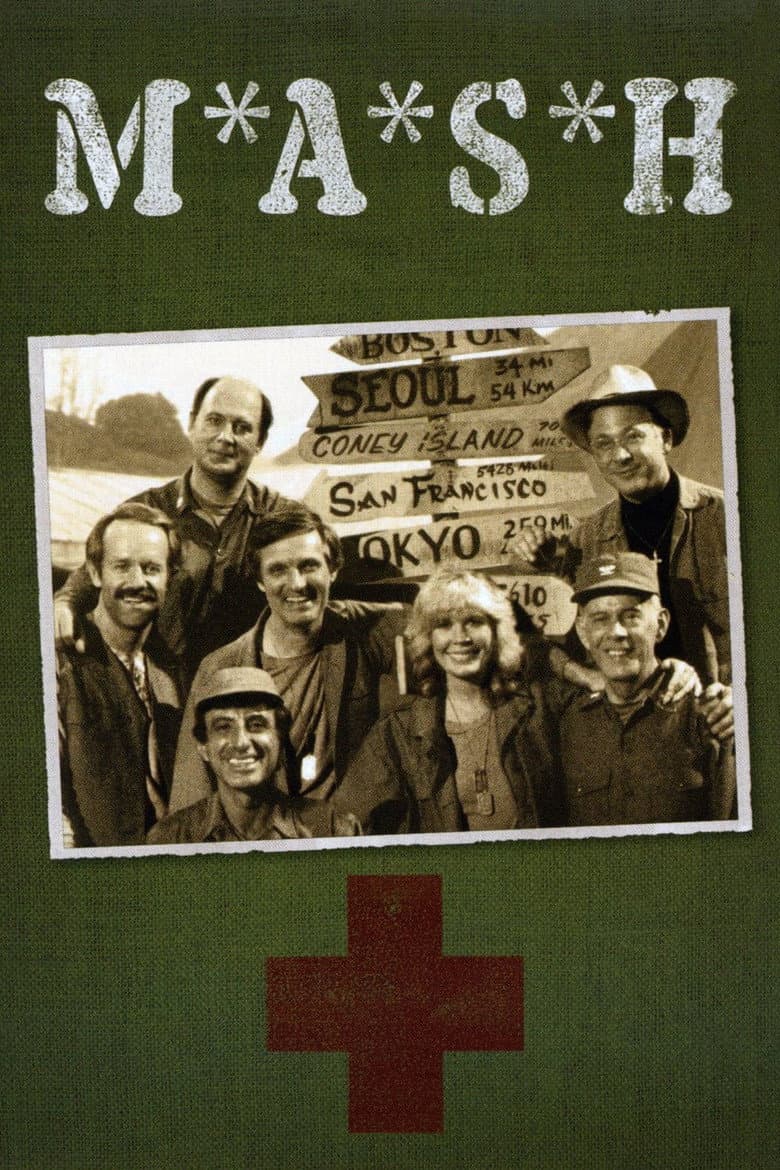
M*A*S*H Review
1972Larry Gelbart and Burt MetcalfeTV Show
A comedy about a war that keeps refusing to be funny, and it changes what television is allowed to do.
| Category | Critic | Users |
|---|---|---|
| Plot | Great | |
| Cinematography | Good | |
| Acting | Great | |
| Dialogue | Great | |
| Overall | Great |
The series runs three times longer than the war it depicts, and the length is part of the argument. Larry Gelbart's early seasons look like a service comedy and behave like something stranger, dropping the laugh track inside the operating room, killing a lead character on screen, and building whole episodes out of one interview or one point of view. Critics recognized the ambition immediately, and the finale still holds the largest audience any American scripted broadcast has ever drawn.
Alan Alda carries it, and the show improves once he stops being the wisecracker and becomes a man visibly wearing down. Loretta Swit rescues Margaret Houlihan from the joke she starts as, Harry Morgan and Mike Farrell steady the middle years, and David Ogden Stiers gives the ensemble the pompous foil it needs once Frank Burns leaves. The problems arrive with the seriousness. As Alda takes a larger hand in production the show begins to lecture, several late seasons trade jokes for moral summation, and the tonal swing inside a single half hour can land as jarring rather than moving.
Photography is better than the format demands, single camera work with real exteriors and a genuine sense of dust and canvas, but it is 1970s network television and it looks it. What survives is the nerve. Nothing before it had put an argument against war inside a hit comedy and kept both halves working.
M*A*S*H at a glance
- Network
- CBS
- Showrunner
- Larry Gelbart and Burt Metcalfe
- Year
- 1972
What’s your grade?
Grade by category
No account needed. Sign in so your grades follow you and count once. · how vote integrity works
Comments
Plain text, 500 characters. Be sharp, not cruel.
No comments yet. Have the first take.