
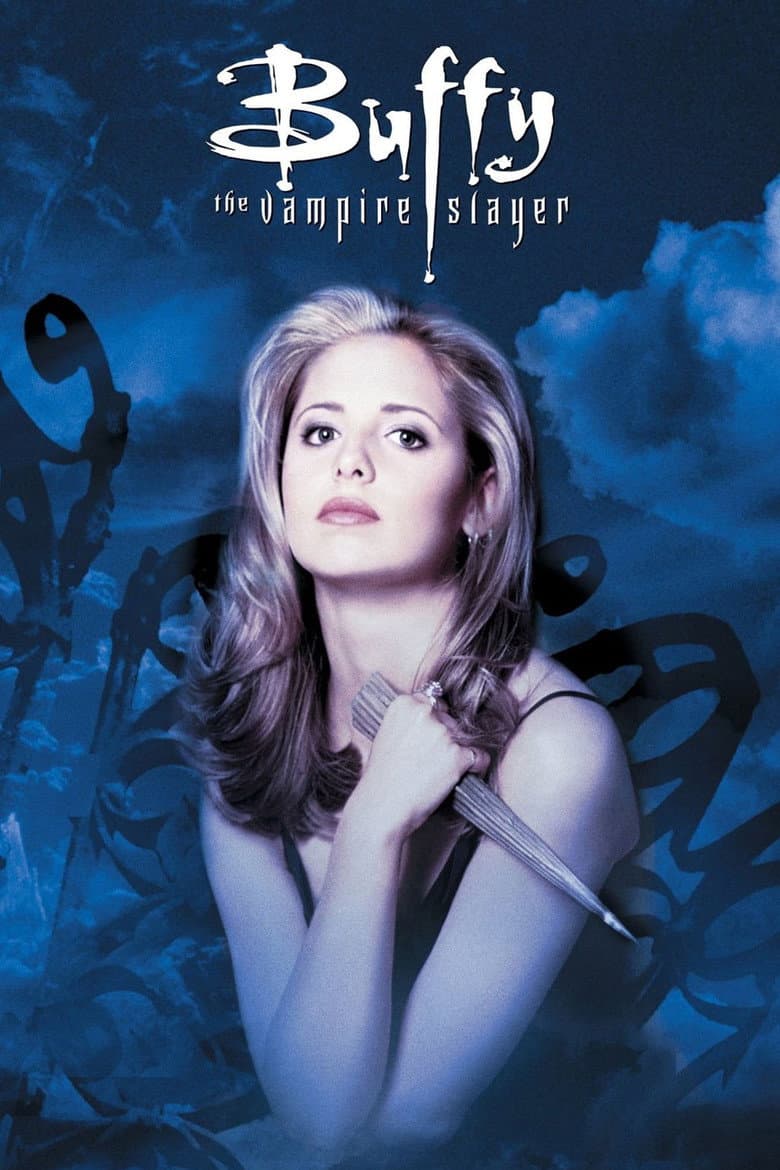
Buffy the Vampire Slayer Review
1997Joss WhedonTV Show
The show that taught American television how to build a season, and how to make its teenagers talk.
| Category | Critic | Users |
|---|---|---|
| Plot | Great | |
| Cinematography | Average | |
| Acting | Good | |
| Dialogue | Exceptional | |
| Overall | Great |
Buffy invents most of what serialized genre television now takes for granted: a season long villain, a monster of the week that doubles as a metaphor for the thing the characters cannot say, and an ensemble allowed to grow up on screen. Its influence is the first thing every retrospective reaches for, and the second is the language. The dialogue is the show's best axis by a distance, a compressed slang a generation of writers copied badly, and the two episodes that abandon it entirely, a silent one and a musical one, are still cited as high points of the medium.
The performances are uneven, strong from Sarah Michelle Gellar, Alyson Hannigan and Anthony Head, thinner elsewhere in the early years. It looks cheap because it was cheap, a late nineties network budget of rubber prosthetics and sets with a visible edge, which is why the visual grade sits two tiers under the rest. The sixth season still divides critics for going darker than the format supported, and the seventh runs its arc thin. The high seasons remain exceptional.
Buffy the Vampire Slayer at a glance
- Network
- The WB / UPN
- Showrunner
- Joss Whedon
- Year
- 1997
What’s your grade?
Grade by category
No account needed. Sign in so your grades follow you and count once. · how vote integrity works
Comments
Plain text, 500 characters. Be sharp, not cruel.
No comments yet. Have the first take.