
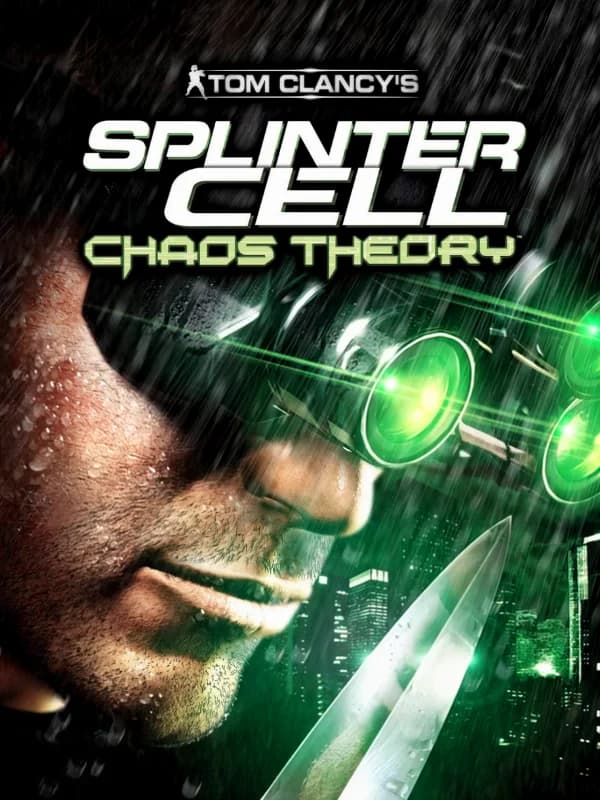
Tom Clancy's Splinter Cell: Chaos Theory Review
2005Ubisoft MontrealGame
The stealth genre's cleanest statement of intent, where light, sound and a knife are the entire toolkit.
| Category | Critic | Users |
|---|---|---|
| Difficulty to make | Great | |
| Visuals | Great | |
| Story | Good | |
| Gameplay | Great | |
| Overall | Great |
Chaos Theory is where the Splinter Cell idea stops being a novelty and becomes the standard. Every level offers at least three honest routes and the instruments to read them: a light meter that tells you what the guards can see, a sound meter that tells them what you just did, and a knife that finally lets Sam interrogate rather than only tranquilize. The lighting engine was the technical showpiece of its year, because darkness here is a resource you manufacture by shooting out bulbs rather than a texture painted into a corner.
Amon Tobin's score reacts to your proximity to being caught, which does more for tension than any cutscene in the series. The cooperative campaign, built around two spies who physically boost each other over walls, was designed better than most standalone multiplayer of the era. The plot is competent scaffolding about an information war and nobody remembers a line of it. As a stealth toolkit it has aged close to perfectly.
Tom Clancy's Splinter Cell: Chaos Theory at a glance
- Platforms
- Xbox, PS2, GameCube, PC
- Developer
- Ubisoft Montreal
- Hours played
- 14
- Year
- 2005
What’s your grade?
Grade by category
No account needed. Sign in so your grades follow you and count once. · how vote integrity works
Comments
Plain text, 500 characters. Be sharp, not cruel.
No comments yet. Have the first take.