
Sid Meier's Civilization VI Review
2016Firaxis GamesGame
Firaxis pulls the city apart across the map and turns six thousand years of turns into an argument about zoning.
| Category | Critic | Users |
|---|---|---|
| Difficulty to make | Great | |
| Visuals | Good | |
| Story | Average | |
| Gameplay | Great | |
| Overall | Great |
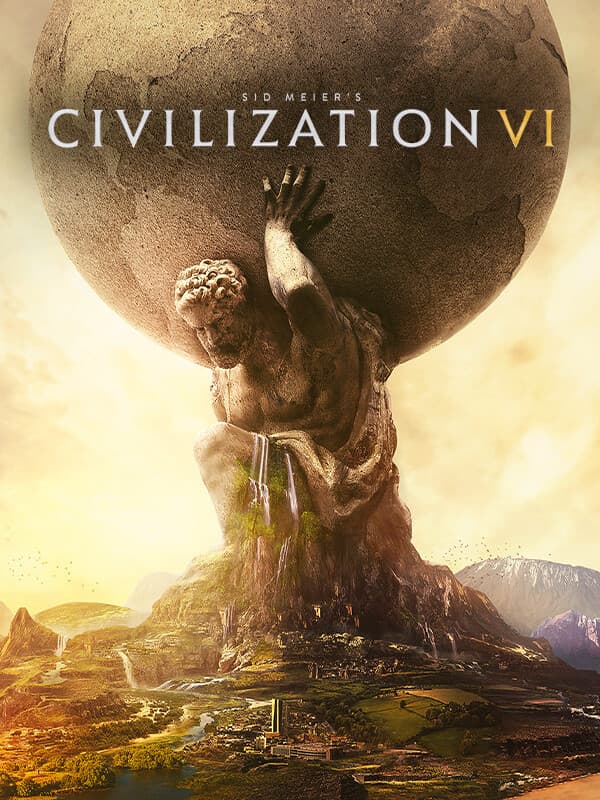
Civilization VI makes one big change and builds everything else around it. Cities no longer sit on a single tile. Districts spread onto the map, so a campus wants mountains beside it, a harbor wants a coast, and the terrain finally argues with your plan instead of decorating it. Builders arrive with a fixed number of charges rather than an endless work order, governments run on swappable policy cards, and Eureka boosts pay you for doing the thing a technology describes, which quietly pushes you to play in character.
The art divided people at launch and divides them now. It is bright and illustrated, with a fog of war drawn like an old chart, and it reads at a glance in a series where reading the board at a glance is most of the work. The complaint that has followed the game since release is the opposition. Leaders announce agendas and then fail to press an advantage, so the late game becomes a long administrative walk once the outcome stops being in doubt.
Rise and Fall and Gathering Storm patched much of that in, which is its own comment on the base box. The story grade is low because there is no written story at all, only the history you leave behind, and a weak opponent makes even that history thin. None of it stops the loop. You promise yourself one more turn at eleven and the sun comes up on a Byzantine navy.
Sid Meier's Civilization VI at a glance
- Platforms
- PC, Mac, Linux, PS4, Xbox One, Switch, iOS
- Developer
- Firaxis Games
- Year
- 2016
What’s your grade?
Grade by category
No account needed. Sign in so your grades follow you and count once. · how vote integrity works
Comments
Plain text, 500 characters. Be sharp, not cruel.
No comments yet. Have the first take.