
Burnout 3: Takedown Review
2004Criterion GamesGame
Criterion made crashing the point instead of the punishment, and no arcade racer since has felt this dangerous.
| Category | Critic | Users |
|---|---|---|
| Difficulty to make | Great | |
| Visuals | Great | |
| Story | Weak | |
| Gameplay | Exceptional | |
| Overall | Great |
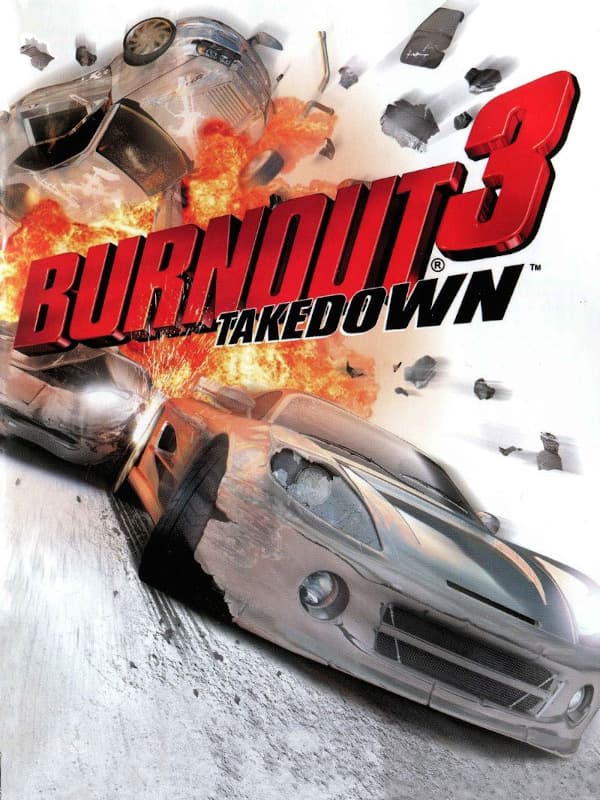
The two earlier Burnouts had the speed. The third one found the idea. Boost is earned by doing things no racing game had ever rewarded, driving into oncoming traffic, missing a lorry by inches, holding a drift you should have abandoned, and then Criterion added the takedown, which refills the bar for slamming a rival into a wall. Aggression stopped being a risk and became the fuel supply, and the whole design rearranges itself around that one change.
Crashes are not failure states either. The camera goes slow, you steer the wreckage with aftertouch to take somebody else out on the way down, and Crash mode spins the same physics into a scoring puzzle about where to detonate. Sixty frames on a PlayStation 2, with a motion blur and a sense of proximity that still reads as fast two decades later, is the technical part of the achievement. The licensed soundtrack and its relentlessly upbeat radio host date the thing precisely to 2004, which most people count as charm. There is no story and there never needed to be one.
Burnout 3: Takedown at a glance
- Platforms
- PlayStation 2, Xbox
- Developer
- Criterion Games
- Year
- 2004
What’s your grade?
Grade by category
No account needed. Sign in so your grades follow you and count once. · how vote integrity works
Comments
Plain text, 500 characters. Be sharp, not cruel.
No comments yet. Have the first take.