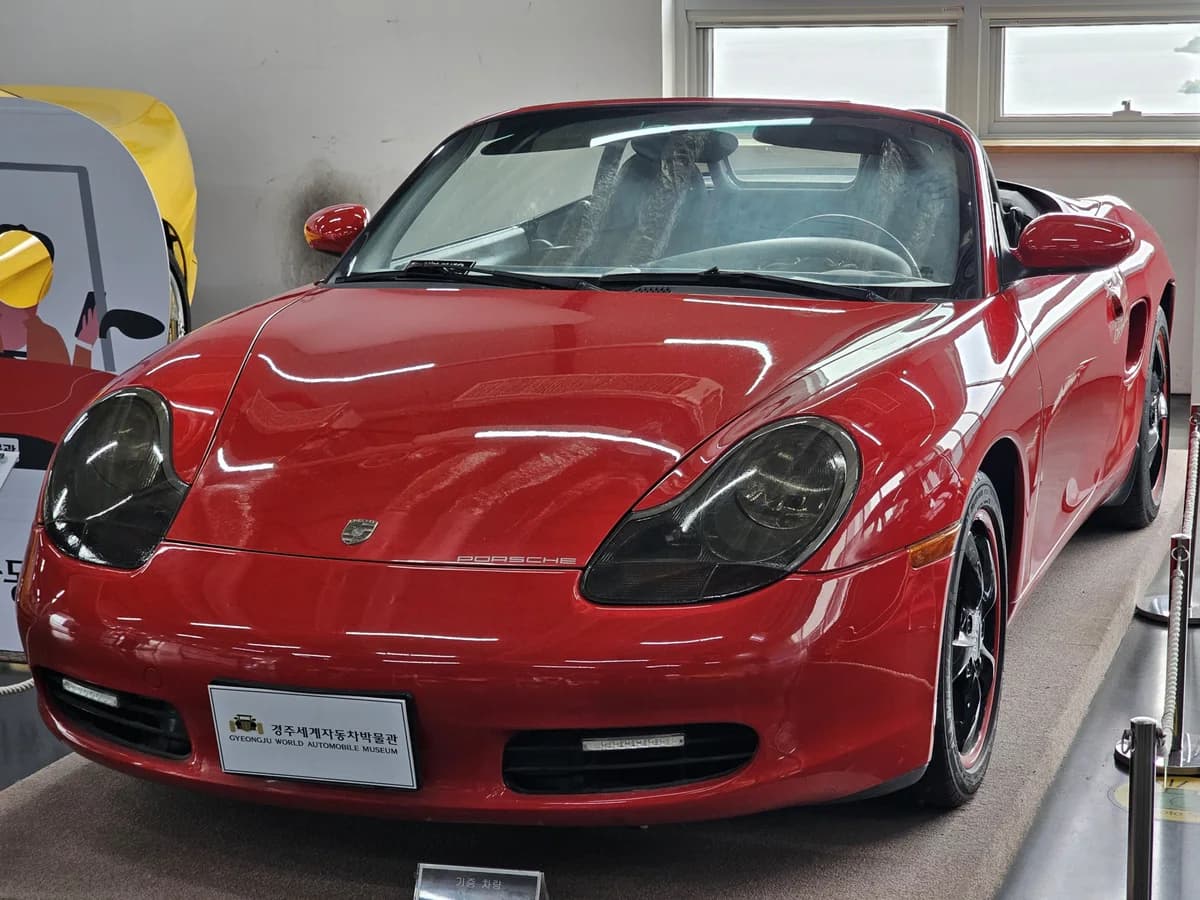
Porsche 928 Review
1977928Car
Meant to replace the 911, the 928 became a superb, heavy grand tourer instead, and decades of neglect have made good ones rarer than they should be.
| Category | Critic | Users |
|---|---|---|
| Exterior | Great | |
| Interior luxury | Good | |
| Features | Great | |
| Reliability | Average | |
| Economy | Weak | |
| Depreciation | Average | |
| Maintenance cost | Weak | |
| Innovation | Great | |
| Engine | Good | |
| User experience | Good | |
| Overall | Good |
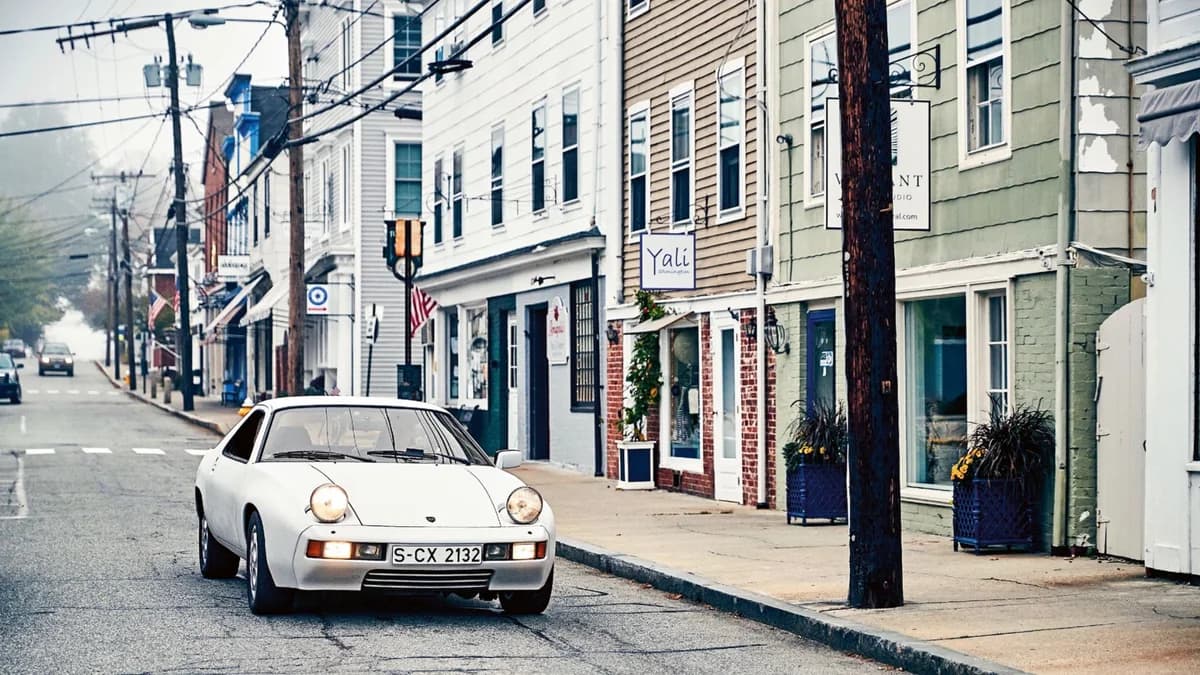
The 928 was built to replace the 911. In the early 1970s Porsche's new chairman, Ernst Fuhrmann, believed the rear-engined car was near the end of its development and feared that American safety and emissions rules might finish it, so Porsche designed its first clean-sheet car around a front engine, a rear gearbox and a proper touring cabin. The oil crisis slowed the project, and the car appeared at the Geneva show in March 1977, going on sale that autumn and in America as a 1978 model. It was European Car of the Year for 1978, the first and only sports car to win. It cost more than any 911 but the Turbo, and a 1979 manual car carried an American sticker of around $29,000.
The engineering is the best part. The 4.5 liter V8 is all aluminum, with one belt-driven camshaft per bank and bores etched into a linerless silicon-alloy block, and it made 240 PS in Europe and 219 hp in American trim; the 944's four was effectively half of it. A slim shaft in a rigid central tube joins it to a rear transaxle, a five-speed manual or a three-speed automatic derived from Mercedes-Benz, for near even weight distribution.
The Weissach axle gives a passive rear-steer effect, the doors, front wings and bonnet are aluminum, the bumpers are body-colored polyurethane, and the instruments move with the adjustable steering column. Classic & Sports Car found the V8 flexible and docile rather than exciting, and Rob Sass told Hagerty it was never meant to be a sports car but a GT, heavier and less nimble than a 911.
It is also a complicated car that spent decades being cheap. Classic & Sports Car's buyer's guide says inattention has taken its toll on most 928s and that past neglect can cost far more to put right than the car is worth. The V8 is an interference engine, so belt, tensioners and water pump must be renewed every four years or so; Stuttcars puts that job at $2,000 to $3,500 and a snapped belt at more than $10,000. Old wiring and relays breed electrical faults, and Hagerty notes that the rubber fuel, transmission and power steering lines must be replaced to avoid the fires the car is known for. Stuttcars puts early cars at $12,000 to $25,000, below the original sticker.
The 928 never replaced the 911, and the 911 outlived it. As a grand tourer it was ahead of its time, and Porsche kept developing it for eighteen years, from 240 PS to 350. Its economy, maintenance and depreciation marks are the cost of that sophistication, and a neglected car can swallow more than it is worth; a sorted one is among the most rewarding long-distance Porsches ever built, and still one of the cheapest ways into a classic Porsche.
Porsche 928 at a glance
Official site- Make
- Porsche
- Model
- 928
- Model year
- 1977
- Body type
- Coupe
- Powertrain
- Naturally aspirated 4.5L V8, 5-speed manual or 3-speed automatic transaxle, rear-wheel drive
- Price
- 29000
What’s your grade?
Grade by category
No account needed. Sign in so your grades follow you and count once. · how vote integrity works
Comments
Plain text, 500 characters. Be sharp, not cruel.
No comments yet. Have the first take.