Porsche 911 Turbo (993) Review
1995911 TurboCar
Twin turbochargers and all-wheel drive turned the Widowmaker into a car for every day, and the last air-cooled Turbo is still the most graceful of them.
| Category | Critic | Users |
|---|---|---|
| Exterior | Exceptional | |
| Interior luxury | Good | |
| Features | Good | |
| Reliability | Good | |
| Economy | Weak | |
| Depreciation | Exceptional | |
| Maintenance cost | Weak | |
| Innovation | Great | |
| Engine | Great | |
| User experience | Great | |
| Overall | Great |
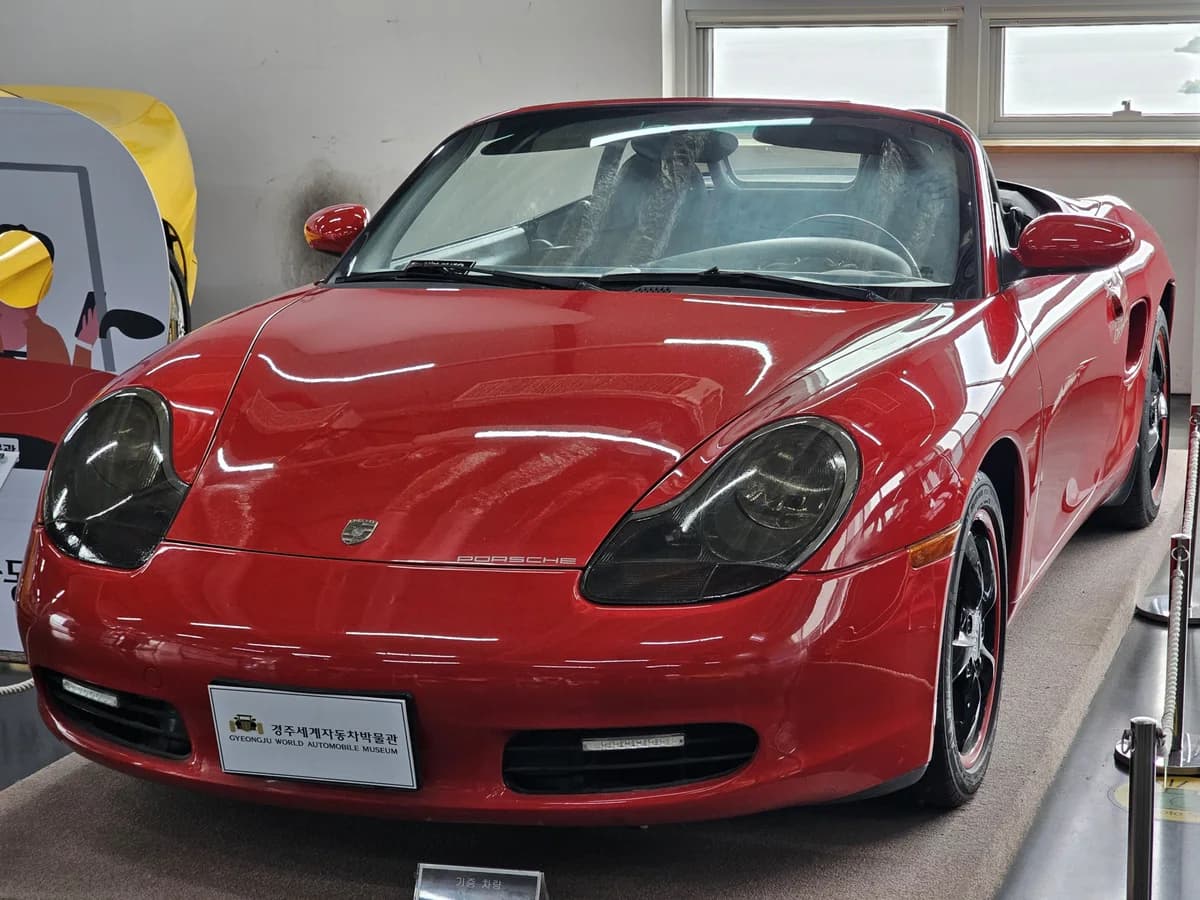
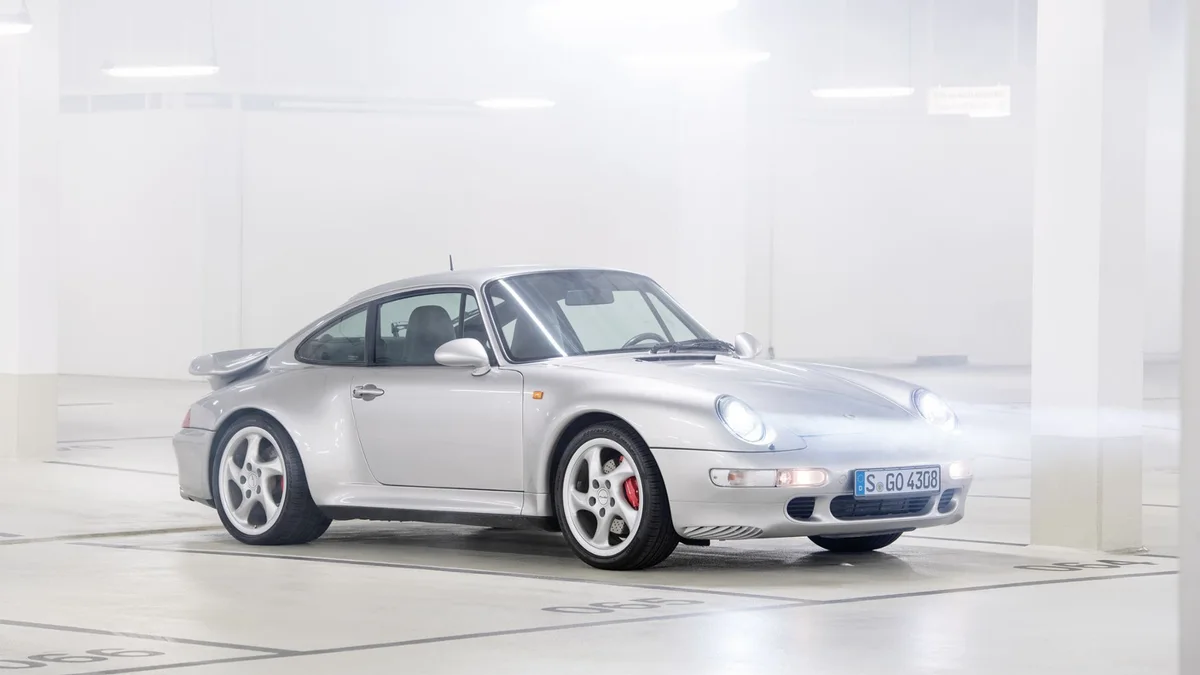
Every 911 Turbo before it, from the 930 to the 964, used a single turbocharger and drove only the rear wheels, and the lag followed by a rush of boost was part of both the legend and the reputation. The 993 Turbo, on sale from early 1995, changed both. It used two smaller KKK K16 turbochargers, one for each cylinder bank, with the intercoolers housed in a fixed rear wing, and the all-wheel-drive system of the Carrera 4, which sent power to the front axle through a viscous multi-plate clutch. American buyers got it as a 1996 model at a base price of $105,000.
The 3.6 liter engine made 408 PS at 5,750 rpm and 540 Nm at 4,500 rpm, and because the small turbines spun up far sooner than the single turbo of the 964, Porsche says 450 Nm was already on hand at 2,500 rpm. The factory quoted 4.5 seconds to 100 km/h and 290 km/h, with a six-speed manual as the only gearbox. The engine was also clean for its kind: with Bosch Motronic M5.2 management the Turbo was, in Porsche's account, the first car in the world offered with the OBD-II diagnostic system, and its engine had the lowest emissions of any series-production unit at the time.
The 18-inch wheels with hollow spokes, a first in car manufacturing according to Porsche, finished a body with wider rear wings and reshaped bumpers. On the road the effect is a relentless, even shove rather than the 930's ambush, with the traction to use it in the wet. A factory power kit raised output to 430 PS, and the 1998 Turbo S had 450 PS.
Ownership is supercar ownership around a sturdier core. The engine is strong, but the gearbox input shafts of 1996 cars were a known weakness, strengthened for 1997, and some routine work means taking the engine out: RM Sotheby's catalogue for Porsche's own former press car, photographed for Paul Frère's Road & Track story in June 1995, lists a €9,000 bill for an engine-out belt change and a new wiring harness. That car sold for €218,500 in Paris in 2025. A 1996 car with 99 miles made $456,000 at RM Sotheby's Amelia Island sale in 2022, and its first owner had paid a $15,000 market adjustment to get it.
The 993 Turbo is where the 911 Turbo grew up. It keeps the air-cooled sound and a real surge of boost, adds traction and composure the earlier cars never had, and wraps them in a body that Porsche's own heritage magazine calls, for many, arguably the most graceful 911 of all. The cost is weight, some of the old drama and running costs that belong to a supercar. As an air-cooled 911 to drive hard rather than to fear, it has no equal.
Porsche 911 Turbo (993) at a glance
Official site- Make
- Porsche
- Model
- 911 Turbo
- Model year
- 1995
- Body type
- Coupe
- Powertrain
- Twin-turbo 3.6L flat-six, 6-speed manual, all-wheel drive
- Price
- 105000
What’s your grade?
Grade by category
No account needed. Sign in so your grades follow you and count once. · how vote integrity works
Comments
Plain text, 500 characters. Be sharp, not cruel.
No comments yet. Have the first take.