
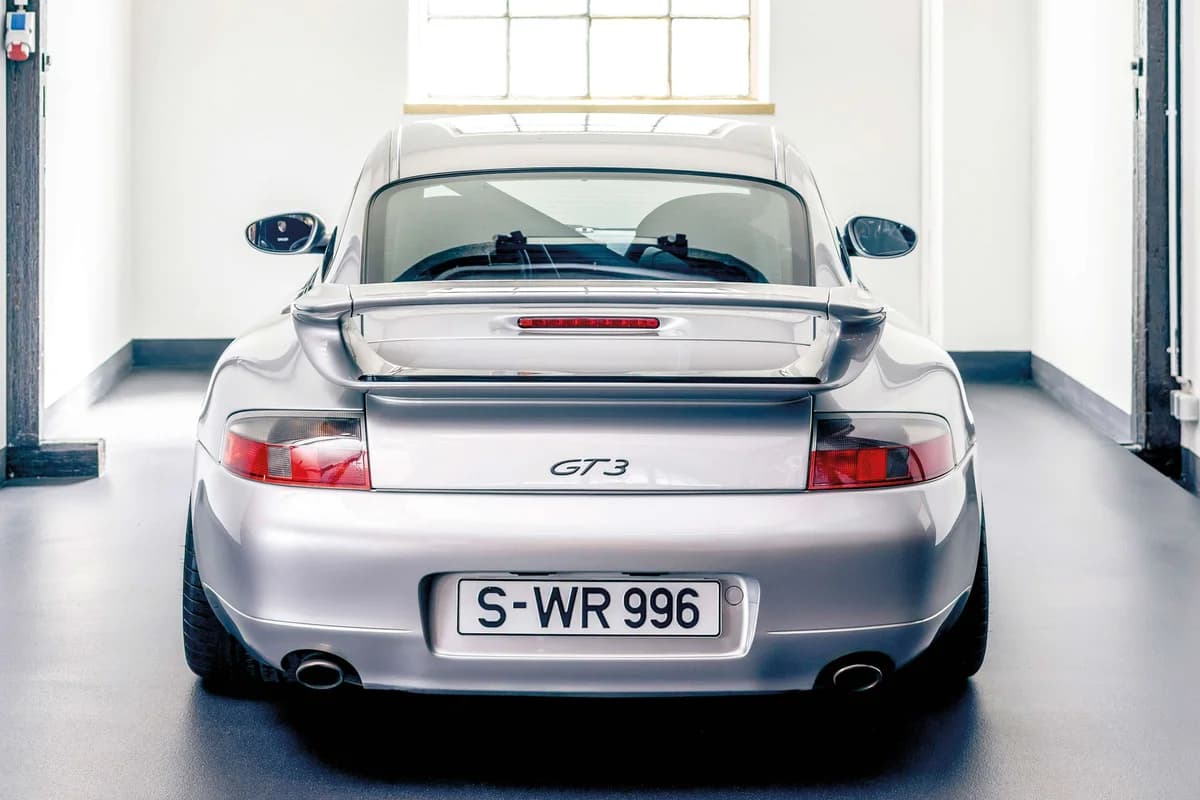
Porsche 911 GT3 (996) Review
1999911 GT3Car
The first GT3 hid a Le Mans-derived engine inside the least loved 911 shape and set the template Porsche still follows.
| Category | Critic | Users |
|---|---|---|
| Exterior | Good | |
| Interior luxury | Average | |
| Features | Average | |
| Reliability | Great | |
| Economy | Average | |
| Depreciation | Great | |
| Maintenance cost | Average | |
| Innovation | Great | |
| Engine | Great | |
| User experience | Good | |
| Overall | Great |
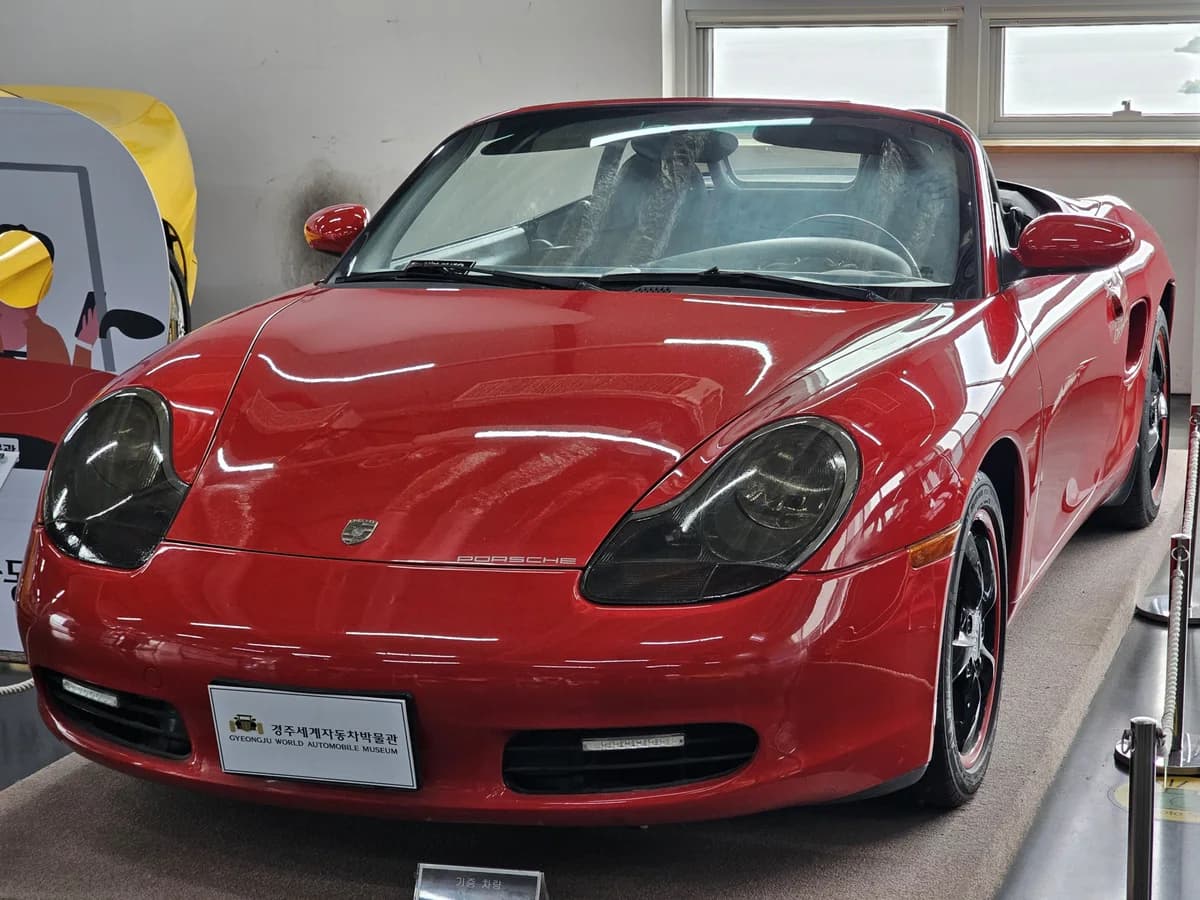
The GT3 arrived for the 1999 model year as a homologation car for GT racing and the successor to the 993 Carrera RS, and it gave the water-cooled 996 the sporting credibility the Carrera lacked. Porsche removed the rear seats, rear speakers, sunroof and most of the sound deadening, made air conditioning and the radio no-cost options, and offered a Clubsport package with racing bucket seats, a bolt-in half cage, a six-point harness and a fire extinguisher. It was never sold new in the United States, which only got the GT3 when the updated car arrived for 2004. In Germany it listed at 179,500 marks, about $98,000 at the 1999 exchange rate, and 1,868 were built.
The engine is why it matters. It shares nothing with the engine in the 996 Carrera: it is the Mezger flat-six, named after its designer Hans Mezger and based on the 962 and 911 GT1 racing engines, with the air-cooled 911's dry-sump crankcase and water jackets added to cool each bank of cylinders. In 3.6 liter form it made 360 PS against the Carrera's 300, and it drove through a G96/50 six-speed with interchangeable ratios, tougher than the Carrera's gearbox.
Lower, re-tuned suspension, bigger brakes and a new front bumper and fixed rear spoiler did the rest, and Porsche promoted the car with Walter Röhrl's 7 minute 56 second lap of the Nordschleife. Next to a modern GT3 it is raw, with road noise and a firm ride, but the steering and the engine's appetite for revs set the pattern for every GT3 since.
It is the easiest car here to own. The Mezger avoids the intermediate shaft bearing and bore scoring problems that dog ordinary 996s, and specialists regard it as one of the toughest Porsche engines of its era. The known weak point is the coolant pipes, bonded into their housings with an adhesive that can fail and dump the coolant; the definitive fix is to weld them in place.
Rear main seal seepage is common, and the clutch and limited-slip differential deserve a check. Running costs are those of an old 911 rather than a supercar. Values fell for a decade after launch and have since recovered toward the original price, by 911Finder's German market data, though the plasticky 996 cabin has not aged well.
The 996 GT3 is not the prettiest or the fastest GT3, and its cabin recalls Porsche's cost-cutting years. It is the car that fixed the formula, though: a racing-derived engine, a manual gearbox and a chassis developed by people who race. Everything from the 997 GT3 RS 4.0 to the current 992 descends from it, and it remains one of the most honest driver's cars Porsche has sold.
Porsche 911 GT3 (996) at a glance
Official site- Make
- Porsche
- Model
- 911 GT3
- Model year
- 1999
- Body type
- Coupe
- Powertrain
- Naturally aspirated 3.6L flat-six, 6-speed manual, rear-wheel drive
- Price
- 98000
What’s your grade?
Grade by category
No account needed. Sign in so your grades follow you and count once. · how vote integrity works
Comments
Plain text, 500 characters. Be sharp, not cruel.
No comments yet. Have the first take.