Google Antigravity Review
Antigravity 2.0AI Model
Google's free, model agnostic agent IDE turns a laptop into a small crew of autonomous coders.
| Category | Critic | Users |
|---|---|---|
| Critical thinking | Good | |
| Coding | Great | |
| Repetitive tasks | Great | |
| Ease of use | Great | |
| Overall | Great |
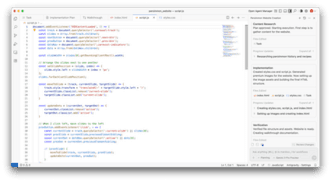
Google launched Antigravity alongside Gemini 3 on 18 November 2025, and it has grown into one of the most interesting things the company ships to developers. It is an agent first platform, a chat driven editor, an IDE built on a VS Code fork, a command line tool and an SDK, all designed so you hand a task to autonomous agents rather than type every line yourself. By the 2.0 update in 2026 it had become a hub for orchestrating whole teams of agents running in persistent Linux environments.
Crucially it is not locked to one brain. Antigravity leads with Gemini 3.1 Pro and Gemini 3 Flash but also runs Anthropic's Claude Opus 4.6 and Sonnet 4.6 and an open OpenAI variant, so you can route each job to the model that suits it. For individuals it is free during the public preview, with generous rate limits on the top Gemini tier, while enterprises step up to a paid Ultra plan and the managed Gemini agent platform.
The rough edges are those of any young agent platform. Long autonomous runs still need supervision, the multi agent model has a learning curve, and it competes in a crowded field against Claude Code, Codex, Cursor and Kiro. But as a free, polished, model agnostic place to let agents do the grunt work, it is hard to beat right now.
Google Antigravity at a glance
Official site- Model
- Antigravity 2.0
- Context window
- 1000000
- Modalities
- text, image
- Price
- 0
- Runs on
- Windows, macOS, Linux
- Release date
- 2025-11-18
What’s your grade?
Grade by category
No account needed. Sign in so your grades follow you and count once. · how vote integrity works
Comments
Plain text, 500 characters. Be sharp, not cruel.
No comments yet. Have the first take.