
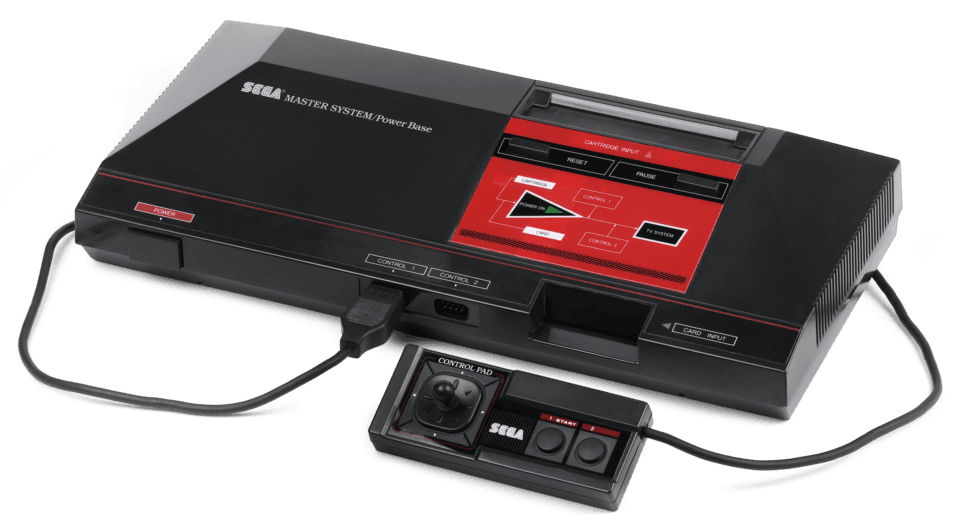
Sega Master System Review
1986SegaConsole
Better hardware than the machine that beat it, with an American library that never arrived to prove the point.
| Category | Critic | Users |
|---|---|---|
| Performance | Good | |
| Game library | Average | |
| Design | Good | |
| Price per value | Good | |
| Overall | Average |
The Master System is the clearest case in the medium of hardware losing to distribution. Sega's 8 bit machine outruns the Nintendo Entertainment System on paper and on screen: more colors at once, more memory, sharper backgrounds, and an FM sound chip Japanese buyers got and Americans did not, which makes the same game sound like a different generation.
Software built for it, rather than ported to it, looks better than nearly anything on the Nintendo. Sega then lost North America before the fight started, because Nintendo's licensing terms tied third party developers to one platform and took the shelf space along with them, so the American library is thin, heavy on Sega's own arcade conversions and short on the sort of classics that sell a console to a family.
Europe is another story entirely. There Sega won outright, and Brazil kept the machine in production and in shops into this century, which is why a generation outside America remembers Alex Kidd the way Americans remember Mario. Alex Kidd in Miracle World, Phantasy Star, Wonder Boy III and the Sonic conversions are genuinely good games. There are simply not enough of them. Judge it by what you could actually buy and it is a console that deserved a better decade.
Sega Master System at a glance
- Brand
- Sega
- Model
- Master System
- Launch year
- 1986
- Launch price
- 199
What’s your grade?
Grade by category
No account needed. Sign in so your grades follow you and count once. · how vote integrity works
Comments
Plain text, 500 characters. Be sharp, not cruel.
No comments yet. Have the first take.