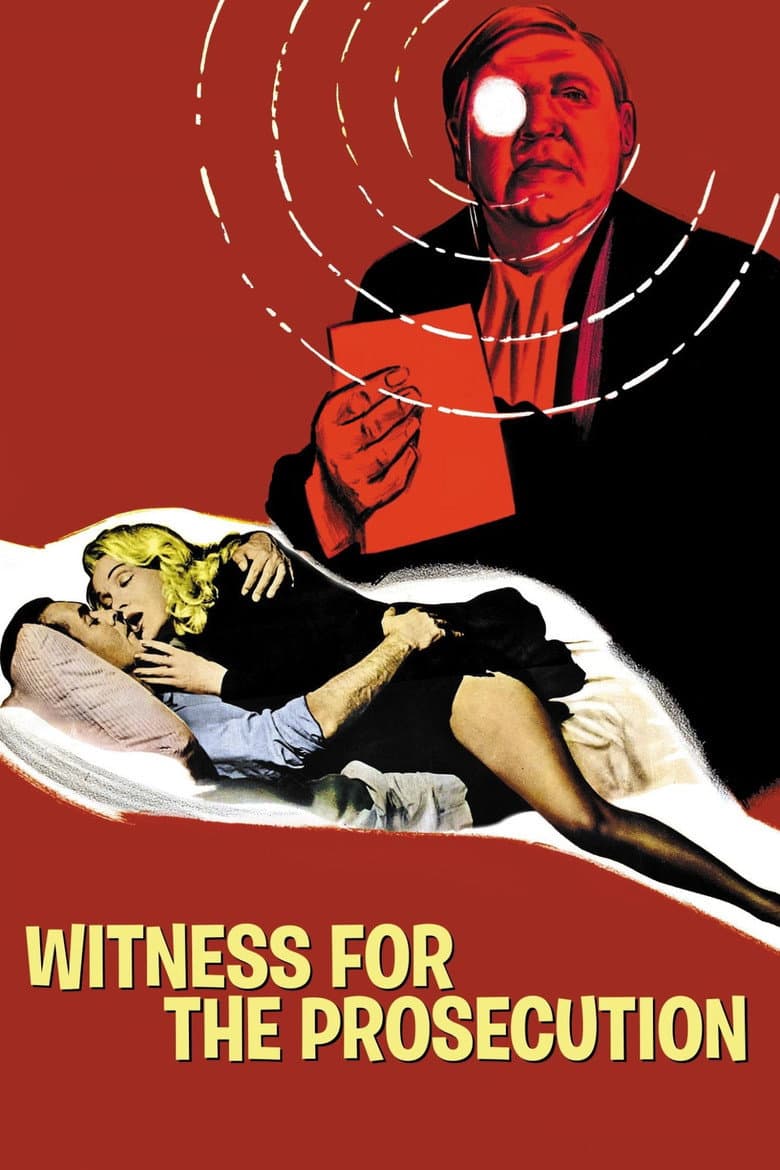
Witness for the Prosecution Review
1957Billy WilderMovie
Charles Laughton's wheezing, monocled barrister is the best reason to see Wilder's Christie adaptation, and the courtroom machinery around him never slips.
| Category | Critic | Users |
|---|---|---|
| Plot | Great | |
| Cinematography | Good | |
| Acting | Great | |
| Dialogue | Great | |
| Overall | Great |
Billy Wilder and Harry Kurnitz rebuilt Agatha Christie's play around the defense barrister, and Charles Laughton seizes the gift. Sir Wilfrid Robarts is back in chambers after a heart attack, minded by Nurse Plimsoll, played by Laughton's wife Elsa Lanchester, whose fussing over his heart and forbidden cigars he meets with schoolboy evasions. Their sparring is the comic engine, and Laughton's courtroom work, down to a monocle routine borrowed from his own lawyer, is some of the most enjoyable acting in any legal drama.
Tyrone Power is serviceable as the boyish accused, which suits the design, and Marlene Dietrich plays his German wife with a chill that turns every scene into a guessing game. A lavish flashback to a postwar German nightclub, with 145 extras and a nod to The Blue Angel in the bar's name, gives her the film's one burst of glamour.
The picture was sold on its ending, with a closing announcement asking audiences not to reveal it, and the twist still lands; Christie herself thought it the best film made from her work. What keeps it below Wilder's finest is that it is someone else's machine, brilliantly serviced but rarely personal, and flatly shot once it leaves the Old Bailey. It earned six Oscar nominations, including best picture, and Lanchester won a Golden Globe.
Witness for the Prosecution at a glance
- Director
- Billy Wilder
- Runtime
- 116 min
- Release year
- 1957
What’s your grade?
Grade by category
No account needed. Sign in so your grades follow you and count once. · how vote integrity works
Comments
Plain text, 500 characters. Be sharp, not cruel.
No comments yet. Have the first take.