To Kill a Mockingbird Review
1962Robert MulliganMovie
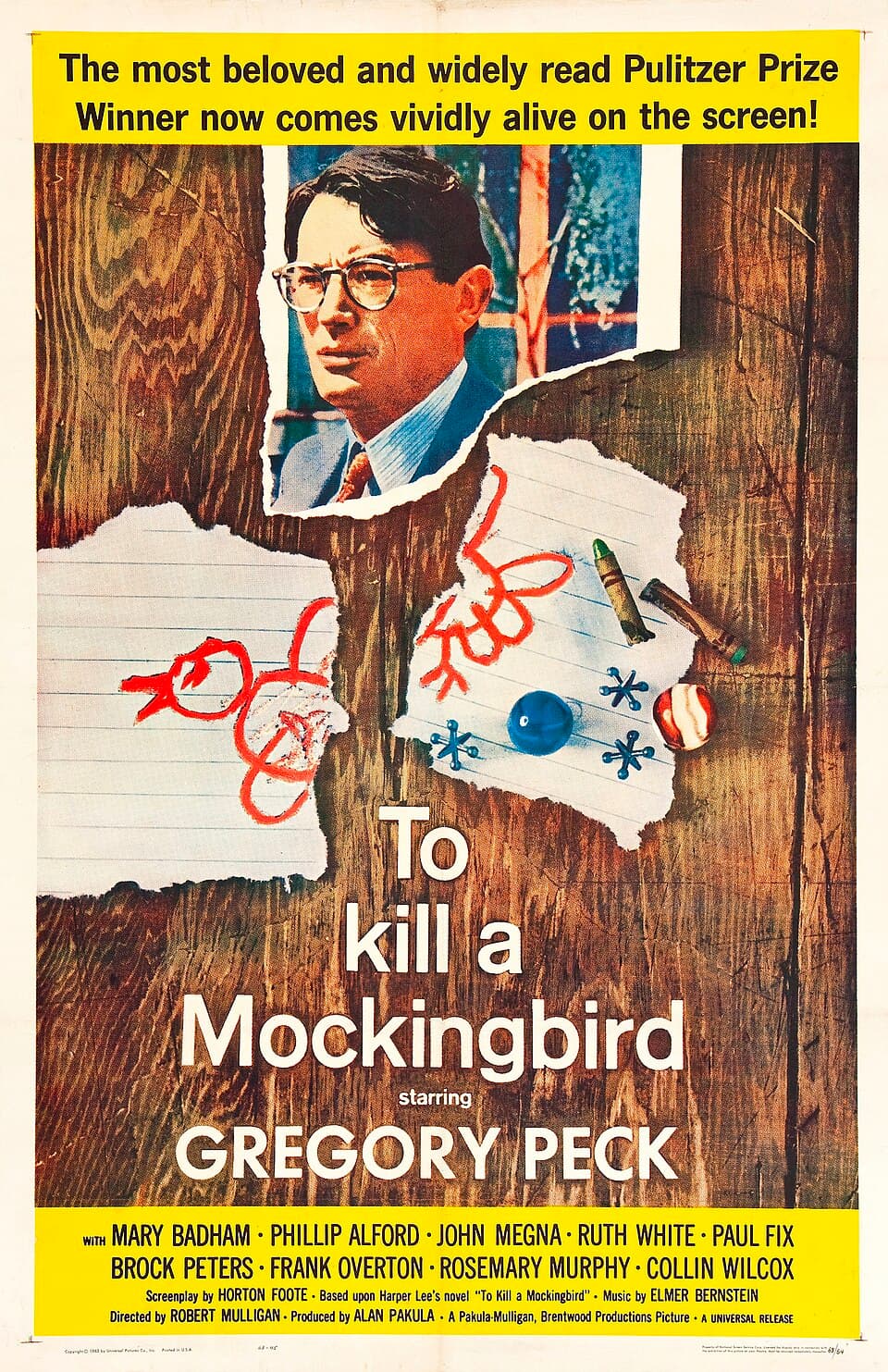
Gregory Peck's Atticus Finch became America's idea of decency, and the film is best when it remembers that it is really Scout's story.
| Category | Critic | Users |
|---|---|---|
| Plot | Good | |
| Cinematography | Great | |
| Acting | Great | |
| Dialogue | Great | |
| Overall | Great |
Horton Foote's Oscar-winning adaptation keeps Harper Lee's frame, a grown woman remembering her childhood, and Robert Mulligan keeps Mary Badham's Scout and Phillip Alford's Jem at the center. The opening titles, a child's hands sorting a cigar box of crayons, marbles and a pocket watch, set the scale, and Russell Harlan's black-and-white photography turns the Universal backlot, built because Monroeville had changed too much, into a Maycomb of porches, dust and heat.
Gregory Peck, who won the Oscar, plays Atticus Finch with a stillness that makes decency look effortless, and the quiet scenes, the children creeping onto the Radley porch at night among them, are the film's best. Brock Peters gives Tom Robinson dignity in very little screen time, and Robert Duvall makes his film debut as Boo Radley.
Roger Ebert later wrote that it expresses the liberal pieties of a more innocent time, and he had a point: the story belongs to the Finches, Tom barely exists outside the trial, and Scout shaming a lynch mob into leaving is wishful. The film works because it is honest about what a child can see and not yet understand, and Elmer Bernstein's score, often ranked among the finest written for film, carries that child's-eye mood. The American Film Institute later named Atticus the greatest hero in American film.
To Kill a Mockingbird at a glance
- Director
- Robert Mulligan
- Runtime
- 129 min
- Release year
- 1962
What’s your grade?
Grade by category
No account needed. Sign in so your grades follow you and count once. · how vote integrity works
Comments
Plain text, 500 characters. Be sharp, not cruel.
No comments yet. Have the first take.