The Sting Review
1973George Roy HillMovie
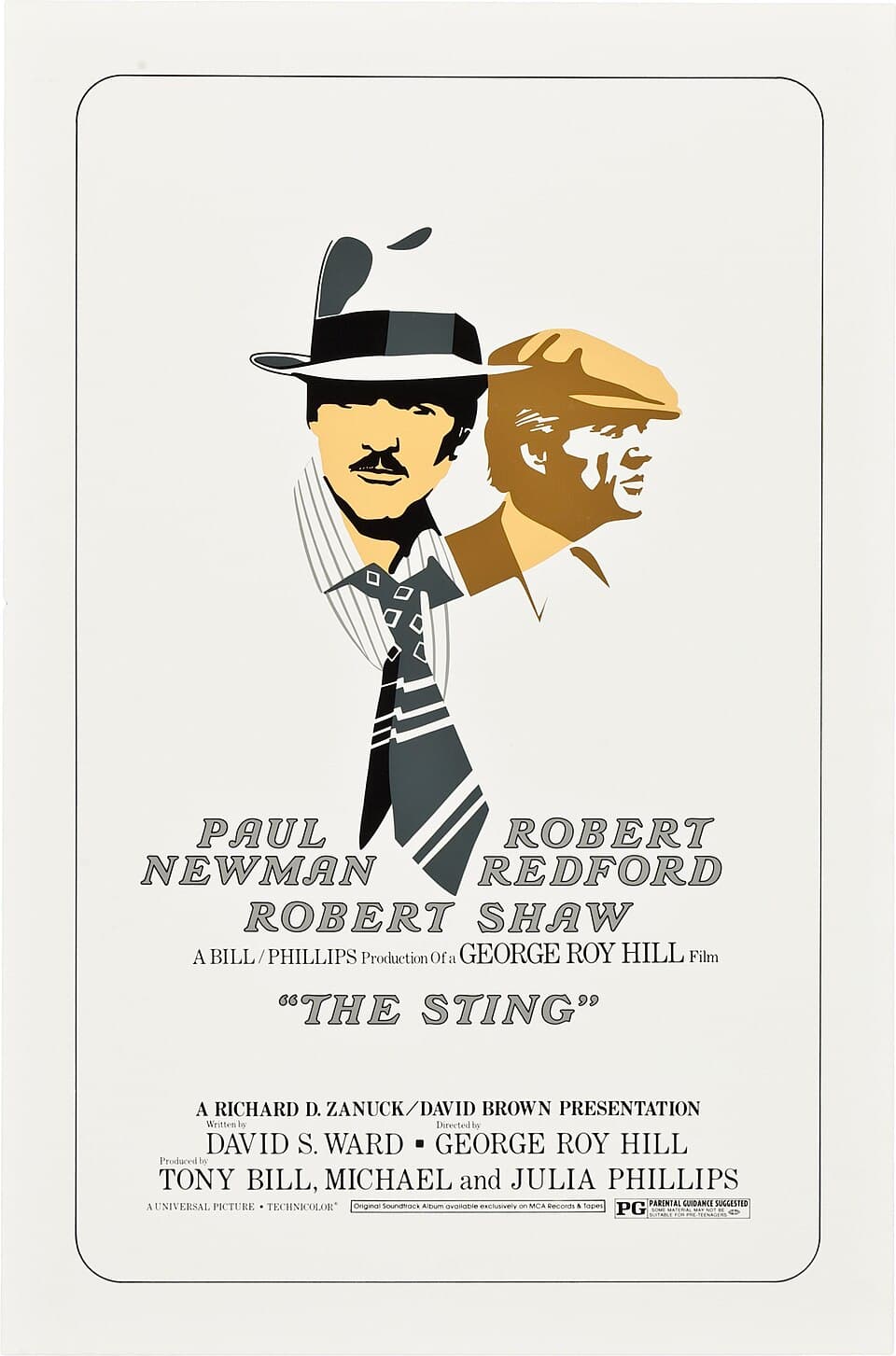
George Roy Hill's con-game caper is clockwork charm from the first title card, and Newman and Redford make being played feel like a privilege.
| Category | Critic | Users |
|---|---|---|
| Plot | Great | |
| Cinematography | Good | |
| Acting | Great | |
| Dialogue | Great | |
| Overall | Great |
David S. Ward's script, drawn from cons chronicled in David Maurer's The Big Con, is a lesson in withholding. The audience is let in on most of the scheme, the old con called the wire, run from a fake off-track betting parlor to fleece Robert Shaw's racketeer Doyle Lonnegan, and the pleasure is watching it assembled. George Roy Hill divides the film into chapters with title cards in the style of Saturday Evening Post covers, and Marvin Hamlisch's arrangements of Scott Joplin rags, written decades before the 1936 setting, give it a wind-up gaiety.
Paul Newman's Henry Gondorff, first found drunk at a carousel, and Robert Redford's Johnny Hooker, a small-timer out to avenge his murdered partner, have the ease of Butch Cassidy and the Sundance Kid without its elegiac weight. Shaw, limping from a real handball injury Hill told him to keep, is a menacing mark, and the poker game aboard the Twentieth Century Limited, where Gondorff out-cheats a cheat, is the funniest scene.
Pauline Kael found it visually claustrophobic and mechanical, and the Universal backlot does look like a backlot, deliberately emptied of extras like a 1930s gangster picture. That artifice is the point: as Vincent Canby noticed, the movie is itself a con. It won seven Oscars, including best picture, and its twists still play fair.
The Sting at a glance
- Director
- George Roy Hill
- Runtime
- 129 min
- Rating
- PG
- Release year
- 1973
What’s your grade?
Grade by category
No account needed. Sign in so your grades follow you and count once. · how vote integrity works
Comments
Plain text, 500 characters. Be sharp, not cruel.
No comments yet. Have the first take.