The Sound of Music Review
1965Robert WiseMovie
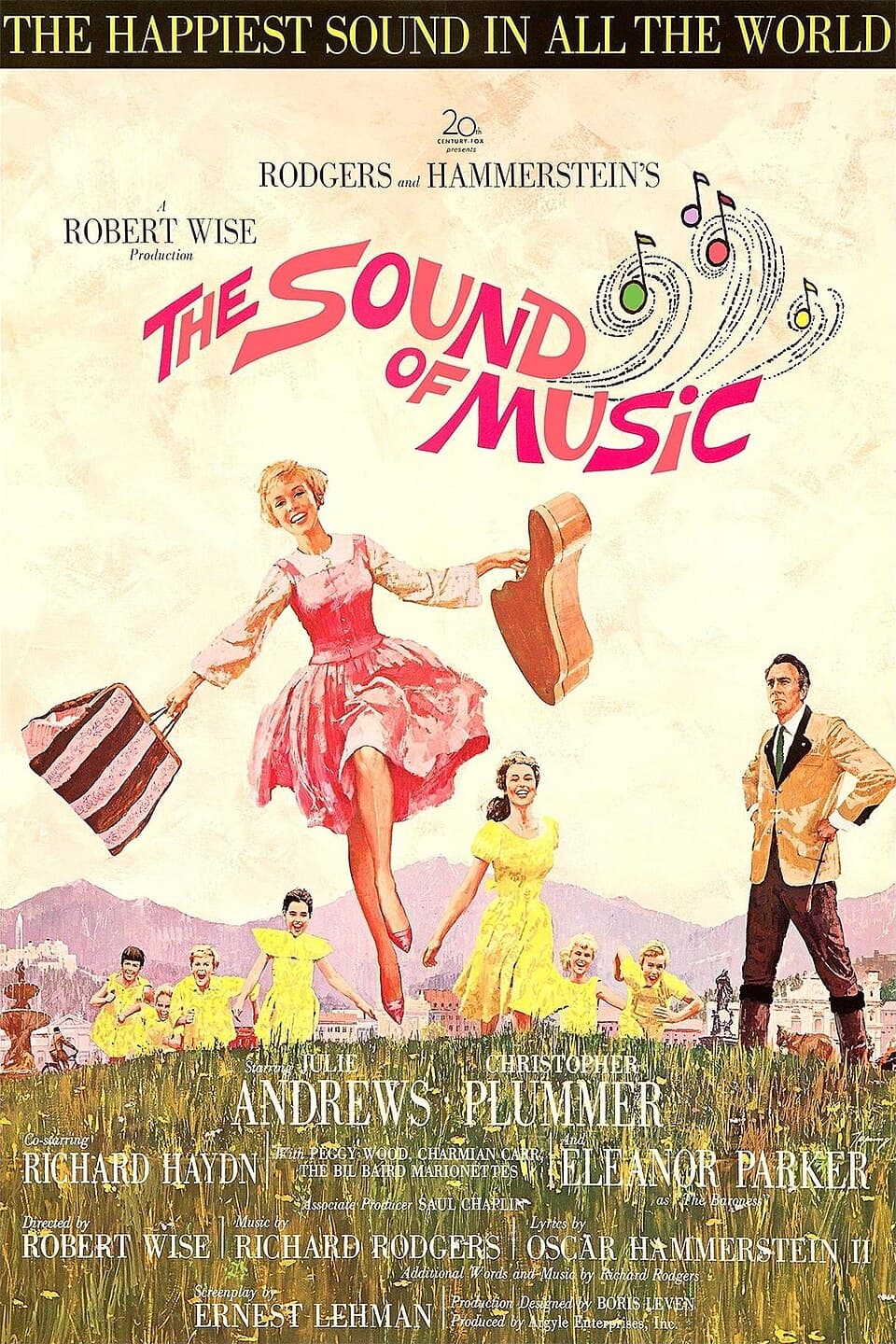
Julie Andrews carries Rodgers and Hammerstein's most sugared show with such conviction that even the skeptics end up humming along.
| Category | Critic | Users |
|---|---|---|
| Plot | Good | |
| Cinematography | Great | |
| Acting | Great | |
| Dialogue | Good | |
| Overall | Good |
Ernest Lehman, who had adapted West Side Story with Robert Wise, opens the stage show out into Salzburg. The aerial approach over the mountains to Julie Andrews on her meadow, filmed across the border in Bavaria, is one of the great openings, and Do-Re-Mi becomes a montage tour of the city in which Maria and the children grow close within a single song. Ted McCord's Todd-AO photography makes the locations a second star.
Andrews, signed after Wise saw footage of the unreleased Mary Poppins, is why it works: brisk, funny and never cloying even when the material is. Christopher Plummer, who turned the role down several times and had his singing dubbed by Bill Lee, gives the Captain a dry edge, and Eleanor Parker's Baroness is the only adult who seems to have a life outside the plot.
At nearly three hours it is long, the Nazi-era third act is suspense by numbers, and the real von Trapps lived less grandly, with a father one daughter remembered as doting rather than a martinet with a bosun's whistle. Pauline Kael called it the sugar-coated lie people seem to want to eat. Audiences disagreed: it overtook Gone with the Wind as the biggest box-office hit ever, held the title for five years, and won five Oscars, including best picture.
The Sound of Music at a glance
- Director
- Robert Wise
- Runtime
- 174 min
- Rating
- G
- Release year
- 1965
What’s your grade?
Grade by category
No account needed. Sign in so your grades follow you and count once. · how vote integrity works
Comments
Plain text, 500 characters. Be sharp, not cruel.
No comments yet. Have the first take.