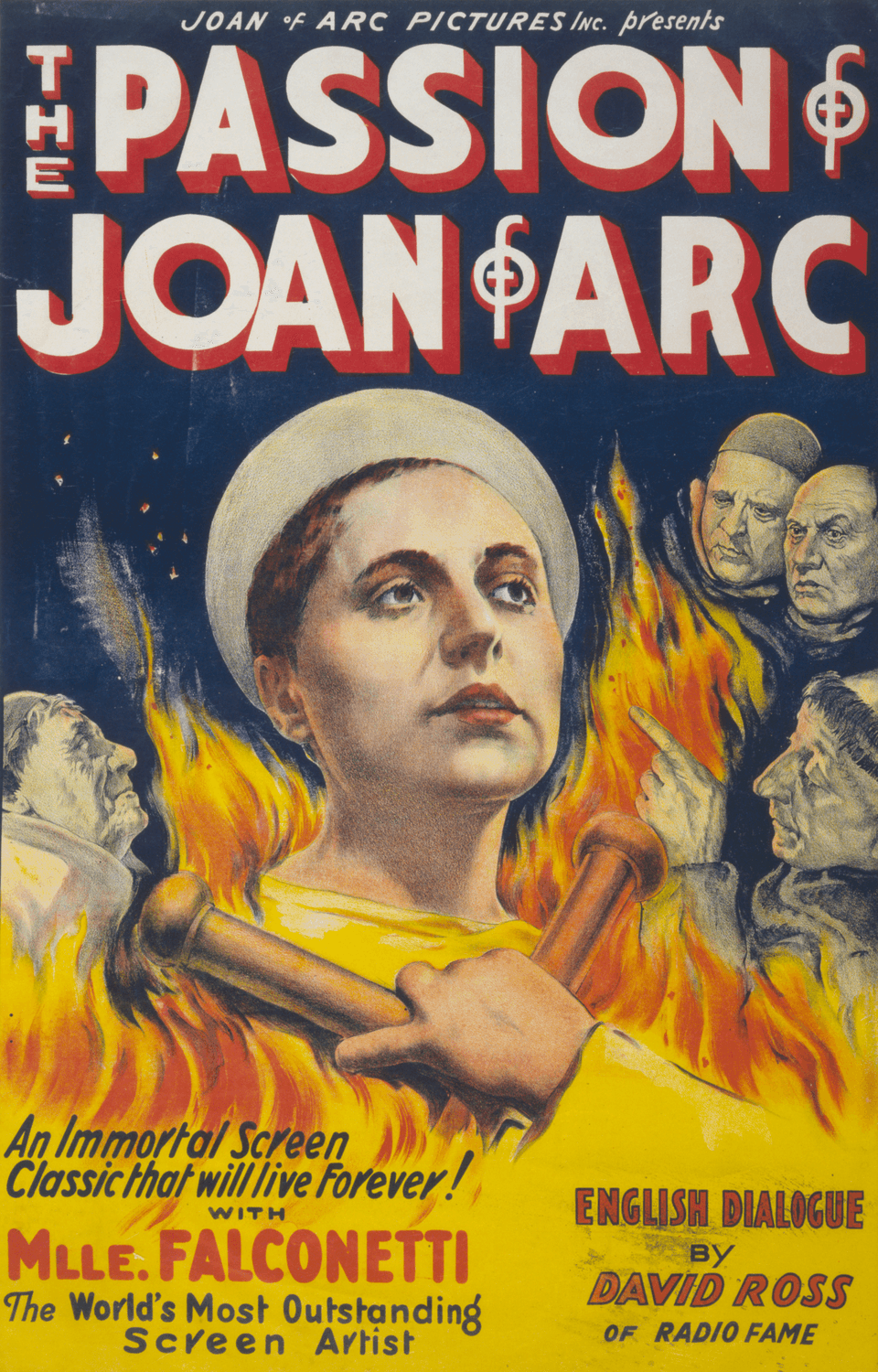
The Passion of Joan of Arc Review
1928Carl Theodor DreyerMovie
Dreyer films a heresy trial almost entirely in close-up, and Falconetti's face under interrogation is the most harrowing performance of the silent era.
| Category | Critic | Users |
|---|---|---|
| Plot | Good | |
| Cinematography | Exceptional | |
| Acting | Exceptional | |
| Dialogue | Good | |
| Overall | Exceptional |
Dreyer built his script from the trial transcripts, compressing 29 interrogations into one day, and shot it almost entirely in close-up. There are no establishing shots, the eyelines refuse to match, and the judges are filmed from below, through holes dug in the set floor, every wart visible because Dreyer banned make-up. Rudolph Maté lights the inquisitors hard and Joan soft. The effect is not a courtroom drama but a face under siege.
The face belongs to Renée Jeanne Falconetti, a stage actress in her second and last film role. Dreyer made her play the scenes again and again, and the result is the performance Pauline Kael called perhaps the finest ever recorded on film. She barely moves; the whole passion is in her eyes. Antonin Artaud, as a sympathetic young monk, is the other face you remember.
Censors cut the film and a fire destroyed the original negative in 1928; a print of Dreyer's own cut surfaced only in 1981, in a closet at a psychiatric hospital outside Oslo. That cut, 82 minutes at 24 frames per second, is the one to see. The frequent title cards interrupt the rhythm the images build, the film's only real cost. It has placed in Sight and Sound's top ten five times.
The Passion of Joan of Arc at a glance
- Director
- Carl Theodor Dreyer
- Runtime
- 82 min
- Release year
- 1928
What’s your grade?
Grade by category
No account needed. Sign in so your grades follow you and count once. · how vote integrity works
Comments
Plain text, 500 characters. Be sharp, not cruel.
No comments yet. Have the first take.