
The Great Escape Review
1963John SturgesMovie
John Sturges turns a real mass breakout into a matinee of ingenuity and star turns, then lets history take the fun away, as it should.
| Category | Critic | Users |
|---|---|---|
| Plot | Great | |
| Cinematography | Good | |
| Acting | Great | |
| Dialogue | Good | |
| Overall | Good |
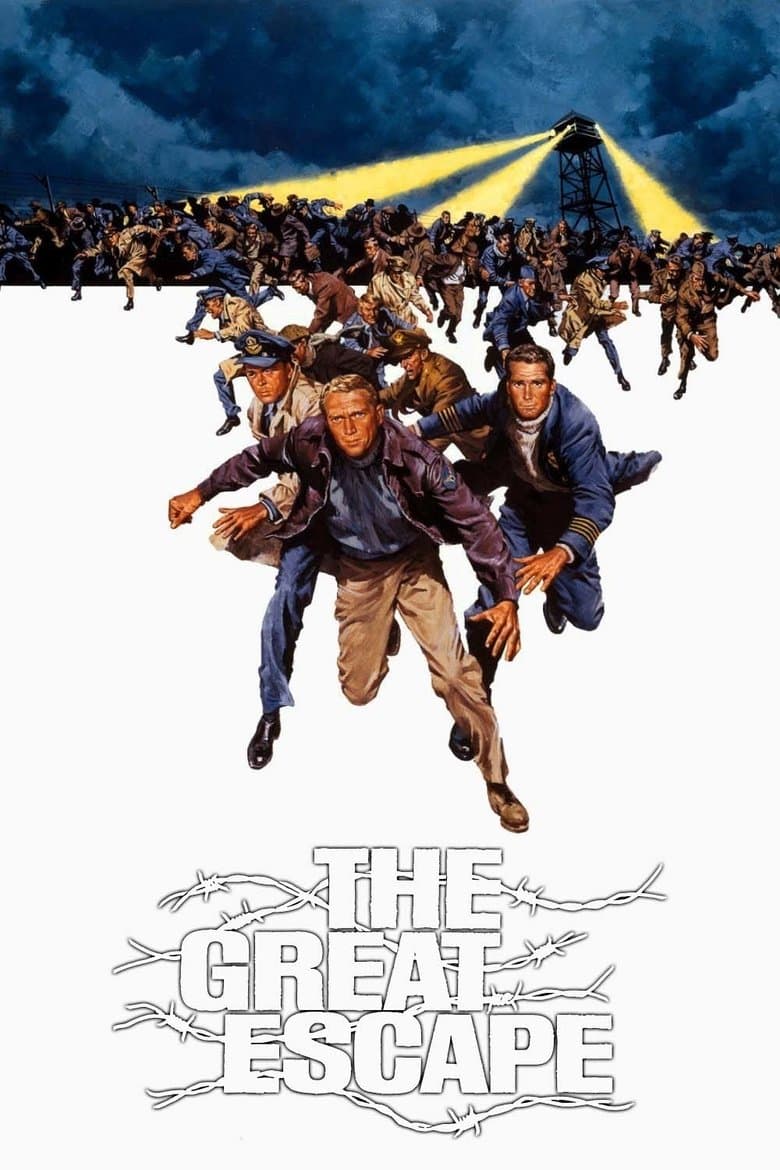
John Sturges spends most of the film on process, and process is the pleasure: Richard Attenborough's Big X running the breakout like a company, James Garner's scrounger working on a naive guard, Donald Pleasence's forger losing his sight over his documents, Charles Bronson's claustrophobic tunnel king, and three tunnels named Tom, Dick and Harry. Pleasence had been a prisoner of war himself, and Sturges, who first told him to keep his opinions to himself, ended up asking for his advice.
Steve McQueen's Hilts, the cooler king with a baseball and mitt, cemented McQueen's stardom, and his motorcycle chase across the Bavarian meadows is the film's signature, though McQueen himself said the famous fence jump was his friend Bud Ekins. Elmer Bernstein's march is so buoyant that the film sometimes forgets where it is set.
The liberties are real. The script inflated the American role in a largely British and Commonwealth escape and left out the Canadians who helped dig it, and Bosley Crowther dismissed it as a strictly mechanical adventure with make-believe men. The characters are types, and at 172 minutes the scattering of escapers across Europe in the last act runs long. But that last act is also where the film turns grave, and it has kept the real escape and its price in public memory for decades.
The Great Escape at a glance
- Director
- John Sturges
- Runtime
- 172 min
- Release year
- 1963
What’s your grade?
Grade by category
No account needed. Sign in so your grades follow you and count once. · how vote integrity works
Comments
Plain text, 500 characters. Be sharp, not cruel.
No comments yet. Have the first take.