The Godfather Review
1972Francis Ford CoppolaMovie
American cinema's high-water mark; a corruption arc told in candlelight and doorways.
| Category | Critic | Users |
|---|---|---|
| Plot | Exceptional | |
| Cinematography | Exceptional | |
| Acting | Exceptional | |
| Dialogue | Exceptional | |
| Overall | Exceptional |
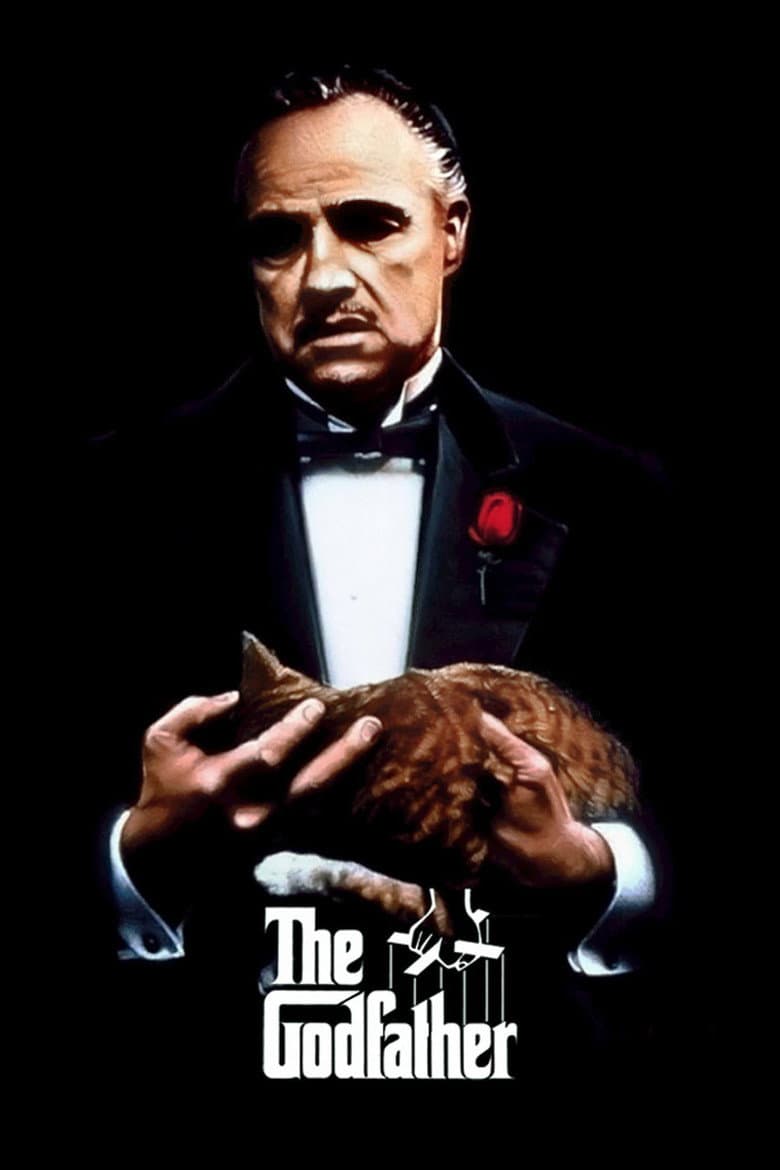
The Godfather is a corruption story told with the patience of scripture. Francis Ford Coppola opens on a wedding that runs nearly half an hour, business conducted in a dark study while daylight celebrates outside, and that contrast, family in the sun, power in the shadows, is the entire film's grammar. Gordon Willis's photography earned him the nickname Prince of Darkness for a reason: he lit Marlon Brando's eyes into sockets of black, underexposed interiors until amber became the color of moral rot, and let doorways frame characters like coffins.
Brando's Vito is all deliberate stillness, but the film belongs to Al Pacino's Michael, who enters as a war hero in a uniform explaining that's my family, Kay, that's not me, and exits having the door literally closed on his wife. The restaurant murder, Michael's eyes darting as the train screeches, is the hinge of American film acting.
The baptism massacre crosscuts renunciation of Satan with executions, form and theme fused perfectly. Every line has entered the language because the dialogue treats crime as governance, offers, favors, respect. Fifty years on, nothing about it has aged a day.
The Godfather at a glance
Official site- Director
- Francis Ford Coppola
- Runtime
- 175 min
- Rating
- R
- Release year
- 1972
What’s your grade?
Grade by category
No account needed. Sign in so your grades follow you and count once. · how vote integrity works
Comments
Plain text, 500 characters. Be sharp, not cruel.
No comments yet. Have the first take.