The Godfather Part II Review
1974Francis Ford CoppolaMovie
The sequel that argues with its original, and deepens it; rise and rot in parallel.
| Category | Critic | Users |
|---|---|---|
| Plot | Exceptional | |
| Cinematography | Exceptional | |
| Acting | Exceptional | |
| Dialogue | Great | |
| Overall | Exceptional |
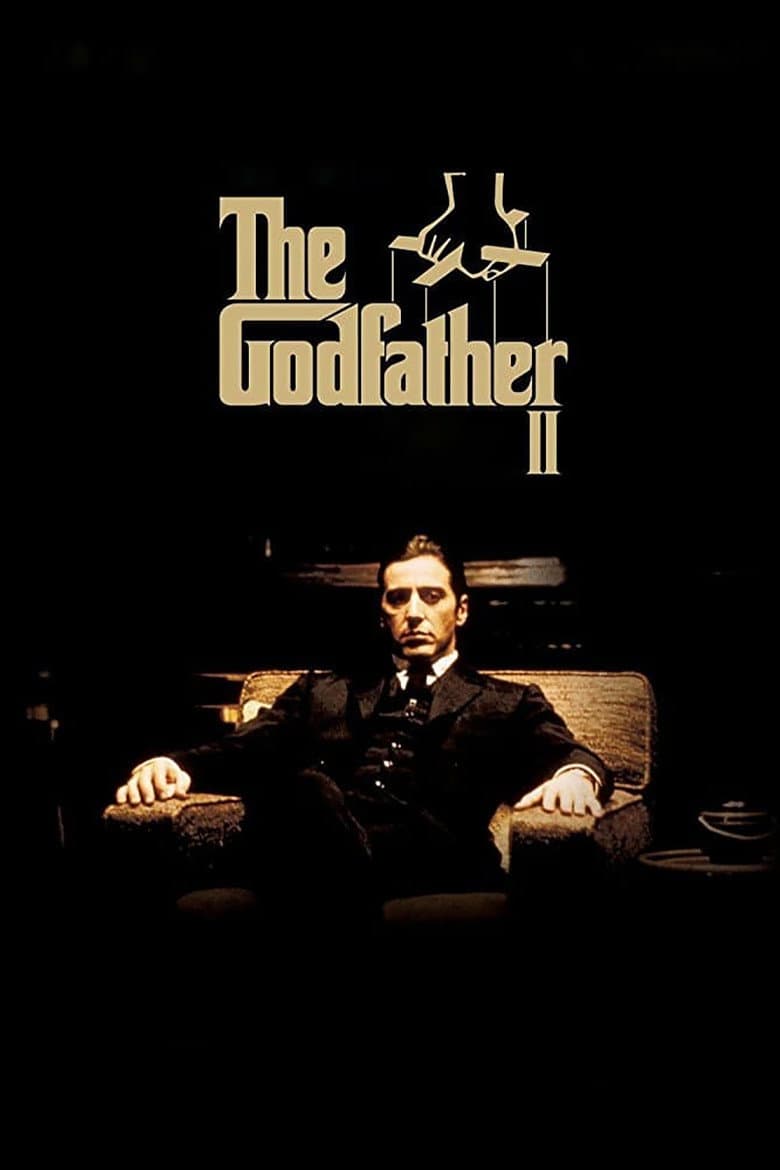
The Godfather Part II runs two films against each other and lets the friction generate meaning: young Vito Corleone builds a family through crime in golden-hued 1920s Little Italy while Michael, decades later, dismantles his own in the wintry glass-and-concrete light of Lake Tahoe and Havana. Francis Ford Coppola's crosscutting is the argument itself; every generous act of Robert De Niro's Vito, played with soft-spoken watchfulness in nearly all Sicilian dialect, indicts the son who inherited the machine without the warmth.
Gordon Willis deepens his shadow work, Vito's world glows amber, Michael's is progressively drained of color and people. Al Pacino spends the film going still, and the stillness is terrifying: the Havana embrace where he tells Fredo I know it was you, the door shutting on Kay a second time, and the final shot of Michael alone in a dead garden, having won everything and everyone away.
John Cazale's Fredo, weak, wounded, and pitiable, is the tragedy's true center. The Senate-hearing stretch runs procedural and slightly long, and the dialogue trades the first film's aphorisms for administration. As a study of power hollowing a man, it is unsurpassed.
The Godfather Part II at a glance
Official site- Director
- Francis Ford Coppola
- Runtime
- 202 min
- Rating
- R
- Release year
- 1974
What’s your grade?
Grade by category
No account needed. Sign in so your grades follow you and count once. · how vote integrity works
Comments
Plain text, 500 characters. Be sharp, not cruel.
No comments yet. Have the first take.