
The General Review
1926Buster Keaton and Clyde BruckmanMovie
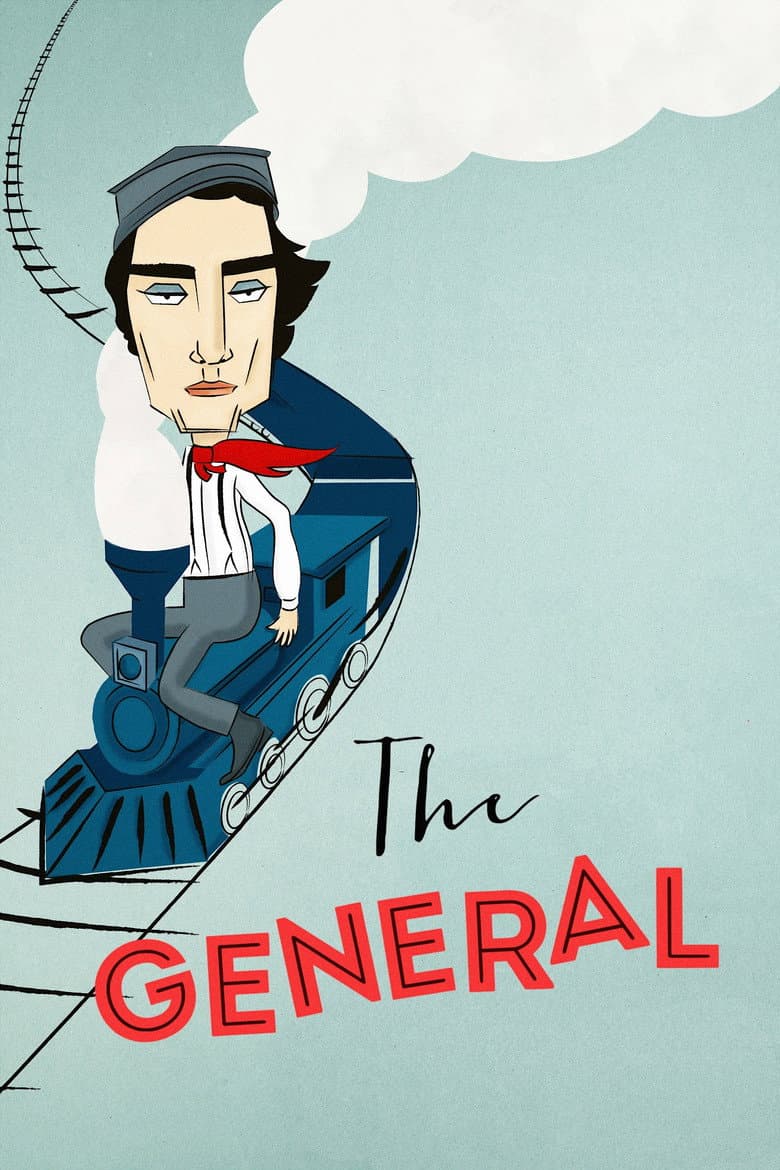
The greatest chase of the silent era, staged with real locomotives on real track, and Keaton never lets the scale swallow the joke.
| Category | Critic | Users |
|---|---|---|
| Plot | Great | |
| Cinematography | Exceptional | |
| Acting | Great | |
| Dialogue | Good | |
| Overall | Exceptional |
Keaton took the Great Locomotive Chase of 1862 from a memoir written on the Union side, flipped it so the hero is the Southern engineer whose train is stolen, and built the film as one pursuit up the line and another back down it. The symmetry is the joke: gags planted on the way north pay off on the way south, and the plot is engineered as tightly as the machines.
He shot around Cottage Grove, Oregon, on real track with period locomotives, in compositions David Robinson compared to Mathew Brady's Civil War photographs. The climax sends a real engine onto a burning bridge that gives way beneath it, filmed by six cameras before thousands of locals. Keaton does his own stunts, clearing a railroad tie while perched on the cowcatcher, sitting heartbroken on a coupling rod as the engine starts to move. The face never changes; the body says everything.
It flopped in 1927, and the cost helped end Keaton's independence. Sight and Sound's critics ranked it eighth in 1972, and Orson Welles called it perhaps the greatest film ever made. The real reservation: the rooting interest is Confederate, and the film never asks what Johnnie fights for. The title cards are few, which keeps the dialogue mark modest.
The General at a glance
- Director
- Buster Keaton and Clyde Bruckman
- Runtime
- 79 min
- Release year
- 1926
What’s your grade?
Grade by category
No account needed. Sign in so your grades follow you and count once. · how vote integrity works
Comments
Plain text, 500 characters. Be sharp, not cruel.
No comments yet. Have the first take.