The Elephant Man Review
1980David LynchMovie
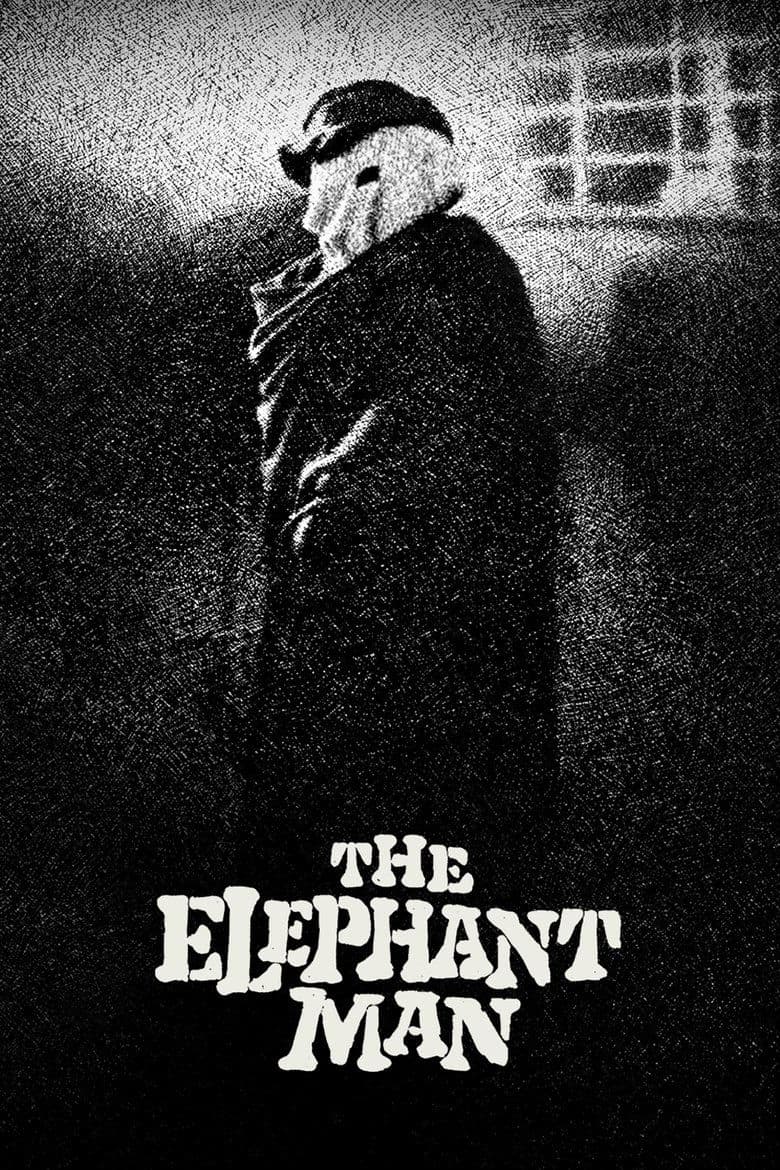
Lynch's most conventional film is still unmistakably his: a Victorian weepie shot like an industrial nightmare, carried by John Hurt acting through a mask.
| Category | Critic | Users |
|---|---|---|
| Plot | Good | |
| Cinematography | Exceptional | |
| Acting | Exceptional | |
| Dialogue | Good | |
| Overall | Great |
Mel Brooks produced it and kept his name off the credits so nobody would expect a comedy. Lynch, on only his second feature, plays the story straight, but his fingerprints are everywhere. Freddie Francis shoots London in black and white as a city of soot and steam, and Lynch, who designed the sound himself, keeps machinery hissing under scene after scene, so the hospital never quite escapes the industrial world that made the freak show possible.
John Hurt acts under Christopher Tucker's makeup, cast from Merrick's own body and seven to eight hours in the chair each day, and builds the man from voice and posture alone. Anthony Hopkins matches him in a quieter part: his Treves starts to suspect that showing Merrick to lecture halls and society visitors is only a politer exhibition, and the film lets that doubt stand. Anne Bancroft, John Gielgud and Wendy Hiller are all exact.
The weakness is sentiment. Freddie Jones's showman and the night porter are melodrama villains, and Barber's Adagio for Strings arrives at the end although the composer John Morris warned that reuse would wear it out. Eight Oscar nominations brought no wins, and the neglect of Tucker's work pushed the Academy to create a makeup award the following year.
The Elephant Man at a glance
- Director
- David Lynch
- Runtime
- 123 min
- Rating
- PG
- Release year
- 1980
What’s your grade?
Grade by category
No account needed. Sign in so your grades follow you and count once. · how vote integrity works
Comments
Plain text, 500 characters. Be sharp, not cruel.
No comments yet. Have the first take.