
Rear Window Review
1954Alfred HitchcockMovie
A thriller assembled entirely out of looking, and it implicates the audience by the second reel.
| Category | Critic | Users |
|---|---|---|
| Plot | Great | |
| Cinematography | Exceptional | |
| Acting | Great | |
| Dialogue | Great | |
| Overall | Average |
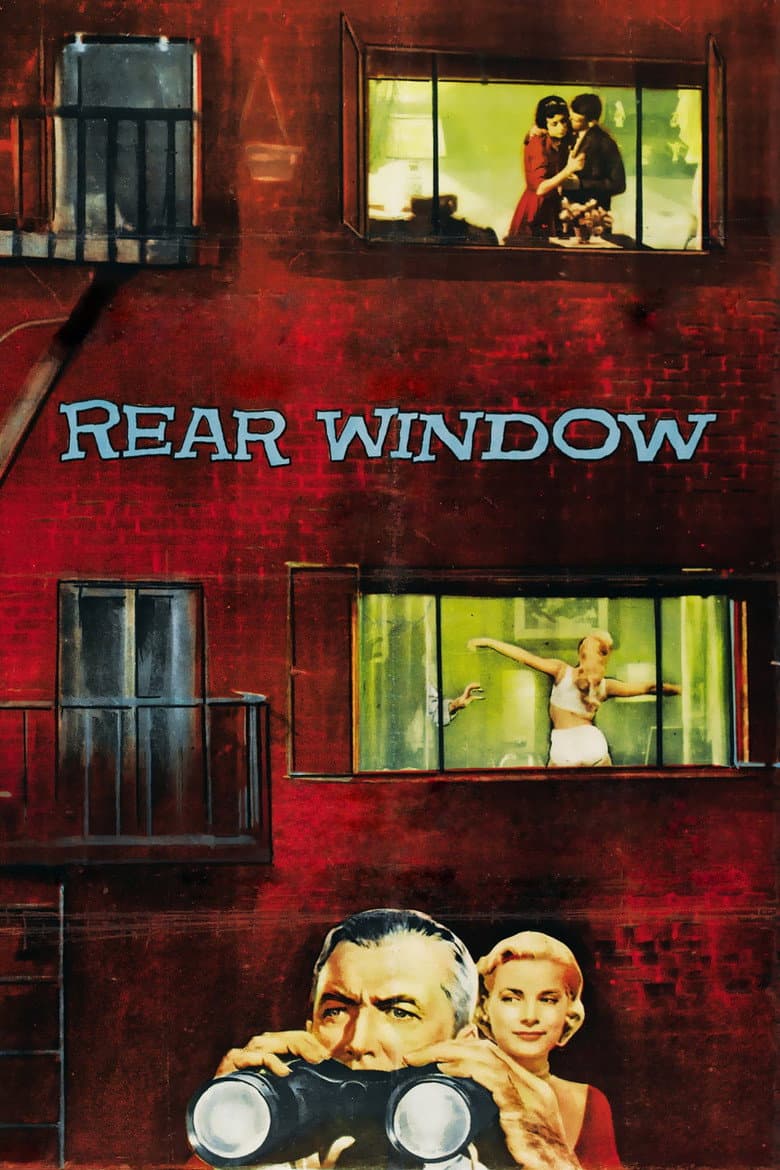
The whole film is a proof about editing. Hitchcock shows Jeff looking, shows what he sees, then shows his reaction, and the audience supplies the meaning that is never on screen. Robert Burks shoots almost everything from inside one apartment, so the courtyard, one of the largest sets Paramount ever built, becomes a wall of silent films playing simultaneously: the newlyweds, the songwriter, Miss Lonelyhearts setting a table for a man who does not exist.
Each is a version of the marriage Jeff is refusing. James Stewart does extraordinary work while immobilized, playing curiosity as a moral failing he cannot stop indulging, and Grace Kelly enters in a fashion-plate Edith Head gown only to become the one who actually climbs the fire escape. Thelma Ritter gets the sharpest dialogue and the bluntest diagnosis. The climax weaponizes the film's own grammar: Jeff's only remaining defense is his camera, and flashbulbs buy him seconds against a man who has finally looked back.
Rear Window at a glance
Official site- Director
- Alfred Hitchcock
- Runtime
- 112 min
- Rating
- PG
- Release year
- 1954
What’s your grade?
Grade by category
No account needed. Sign in so your grades follow you and count once. · how vote integrity works
Comments
Plain text, 500 characters. Be sharp, not cruel.
No comments yet. Have the first take.