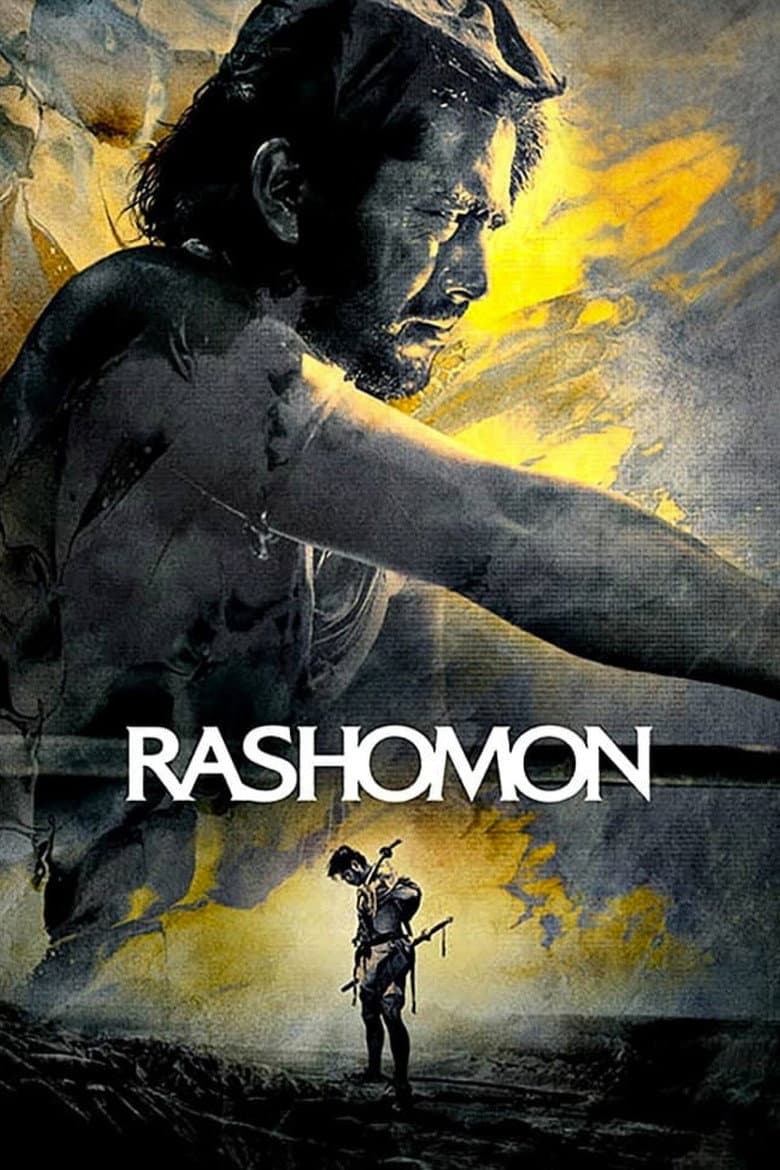
Rashomon Review
1950Akira KurosawaMovie
Four accounts of one killing, none reconcilable, shot straight into the sun.
| Category | Critic | Users |
|---|---|---|
| Plot | Great | |
| Cinematography | Exceptional | |
| Acting | Good | |
| Dialogue | Good | |
| Overall | Good |
The structure is the reason the title became a common noun: a bandit, a wife, a dead husband speaking through a medium, and a woodcutter each narrate the same encounter, and the accounts differ not in facts but in who behaved with dignity. Kurosawa never adjudicates. What keeps it from being a debating exercise is Kazuo Miyagawa's camera, which does two things nobody had done. It points directly at the sun through the forest canopy, then thought a certain way to ruin a negative, so the flashbacks flicker with light breaking through leaves.
And it moves constantly, tracking alongside characters through the trees with mirrors bouncing sun onto their faces, so the woods feel like a place where perception itself is unreliable. Mifune plays the bandit at a deliberately theatrical pitch, all cackle and scratch, which some find grating and which reads better once you understand each version is a performance staged by its teller. The Rashomon gate framing states the theme aloud more than it needs to. The baby in the final scene is a thin resolution to an argument with no floor.
Rashomon at a glance
- Director
- Akira Kurosawa
- Runtime
- 88 min
- Rating
- Not Rated
- Where to watch
- The Criterion Channel
- Release year
- 1950
What’s your grade?
Grade by category
No account needed. Sign in so your grades follow you and count once. · how vote integrity works
Comments
Plain text, 500 characters. Be sharp, not cruel.
No comments yet. Have the first take.