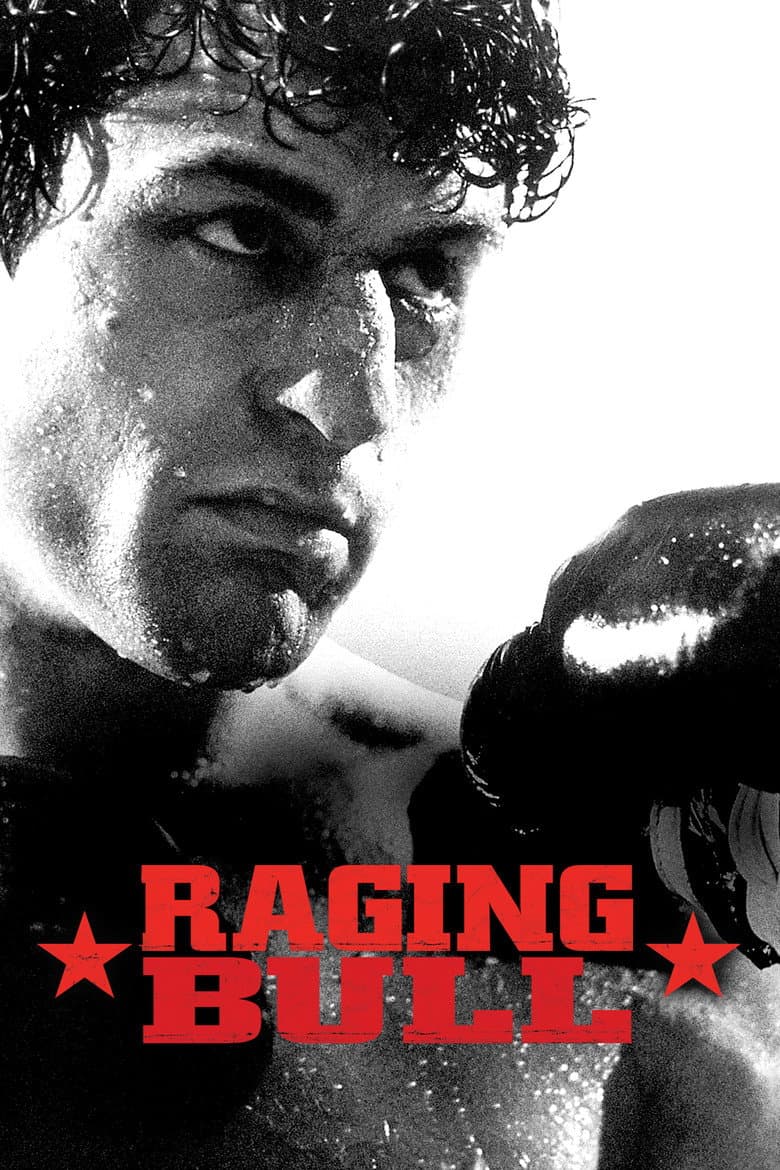
Raging Bull Review
1980Martin ScorseseMovie
Scorsese's hardest film, and the rare boxing picture with no interest in whether you like the fighter.
| Category | Critic | Users |
|---|---|---|
| Plot | Great | |
| Cinematography | Exceptional | |
| Acting | Exceptional | |
| Dialogue | Great | |
| Overall | Exceptional |
Scorsese has said he thought he was making his last film, and the recklessness shows in every choice. Michael Chapman shot in black and white partly to dodge comparison with other boxing pictures and partly because blood reads better as ink, and the fight scenes abandon geography entirely, changing ring dimensions between bouts and putting the camera inside the violence so the audience gets no safe vantage point. Thelma Schoonmaker's editing of those sequences won her the first of three Academy Awards and remains the reference.
De Niro's physical transformation is the detail everyone repeats, but the performance is better in the quiet scenes, the jealousy over a single sentence Vickie says about another fighter, than it ever is in the ring. Joe Pesci is the film's conscience and Cathy Moriarty was nineteen and never gets enough credit. It is a difficult two hours because LaMotta is a hard man to spend time with and Scorsese refuses to soften him. The last scene offers self knowledge without offering forgiveness.
Raging Bull at a glance
- Director
- Martin Scorsese
- Runtime
- 129 min
- Rating
- R
- Release year
- 1980
What’s your grade?
Grade by category
No account needed. Sign in so your grades follow you and count once. · how vote integrity works
Comments
Plain text, 500 characters. Be sharp, not cruel.
No comments yet. Have the first take.