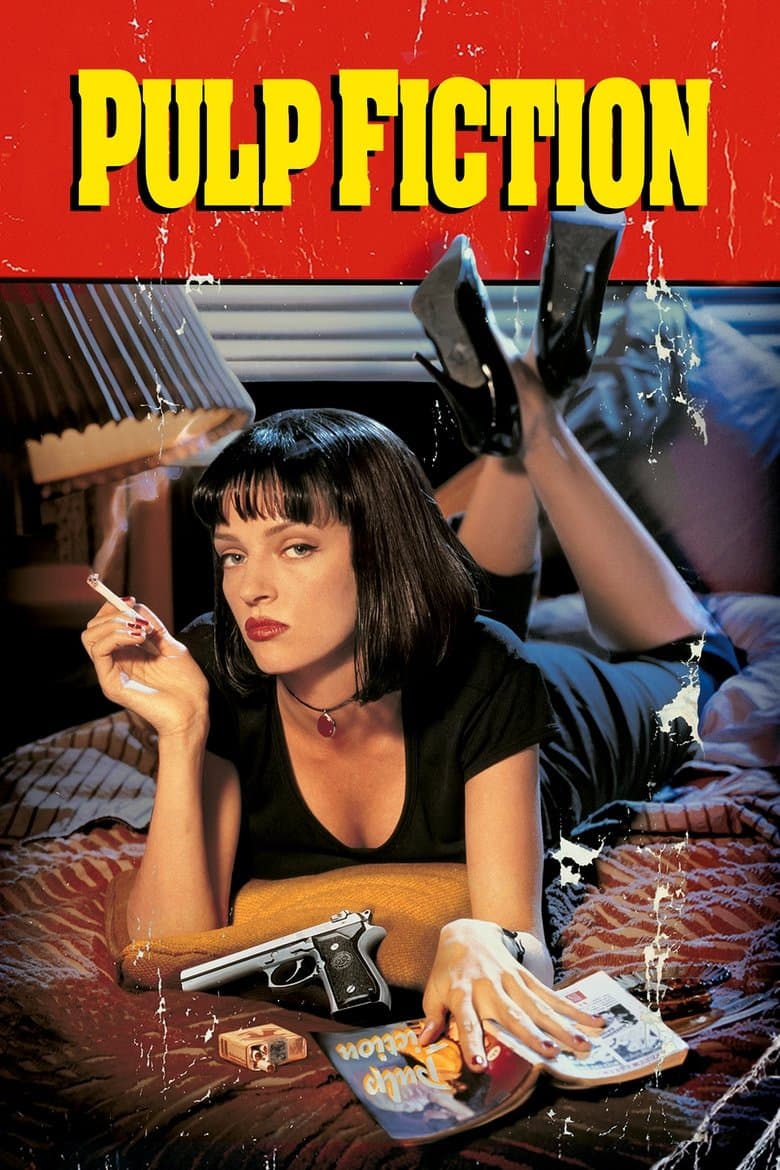
Pulp Fiction Review
1994Quentin TarantinoMovie
The film that rewired 1990s cinema and still talks faster than its imitators.
| Category | Critic | Users |
|---|---|---|
| Plot | Exceptional | |
| Cinematography | Great | |
| Acting | Exceptional | |
| Dialogue | Exceptional | |
| Overall | Exceptional |
Pulp Fiction's structure is its masterstroke: three pulp stories dealt out of order so that Vincent Vega dies in the middle and walks out of the diner alive at the end, a chronology trick that turns cheap material into a meditation on second chances. Quentin Tarantino's dialogue became a national dialect, the royale with cheese, the foot-massage debate, Ezekiel 25:17, because it treats hitmen as bored professionals whose talk is procrastination before violence.
John Travolta and Samuel L. Jackson build the best two-hander of the decade, and Jackson's final diner monologue, where he re-reads his own scripture mid-robbery and chooses mercy, gives the whole mosaic a moral spine most imitators never noticed. Uma Thurman's twist contest and adrenaline-needle overdose swing the Mia Wallace section from cool to horror in one cut.
Bruce Willis's boxer chapter detours into a pawnshop nightmare that should break the film and instead proves its range. The needle drops, surf guitar under Los Angeles ennui, redefined how movies use pop. Butch's gold watch backstory runs a shade long, and that is the complete list of flaws. This is the modern American independent film, still undefeated.
Pulp Fiction at a glance
Official site- Director
- Quentin Tarantino
- Runtime
- 154 min
- Rating
- R
- Release year
- 1994
What’s your grade?
Grade by category
No account needed. Sign in so your grades follow you and count once. · how vote integrity works
Comments
Plain text, 500 characters. Be sharp, not cruel.
No comments yet. Have the first take.