Modern Times Review
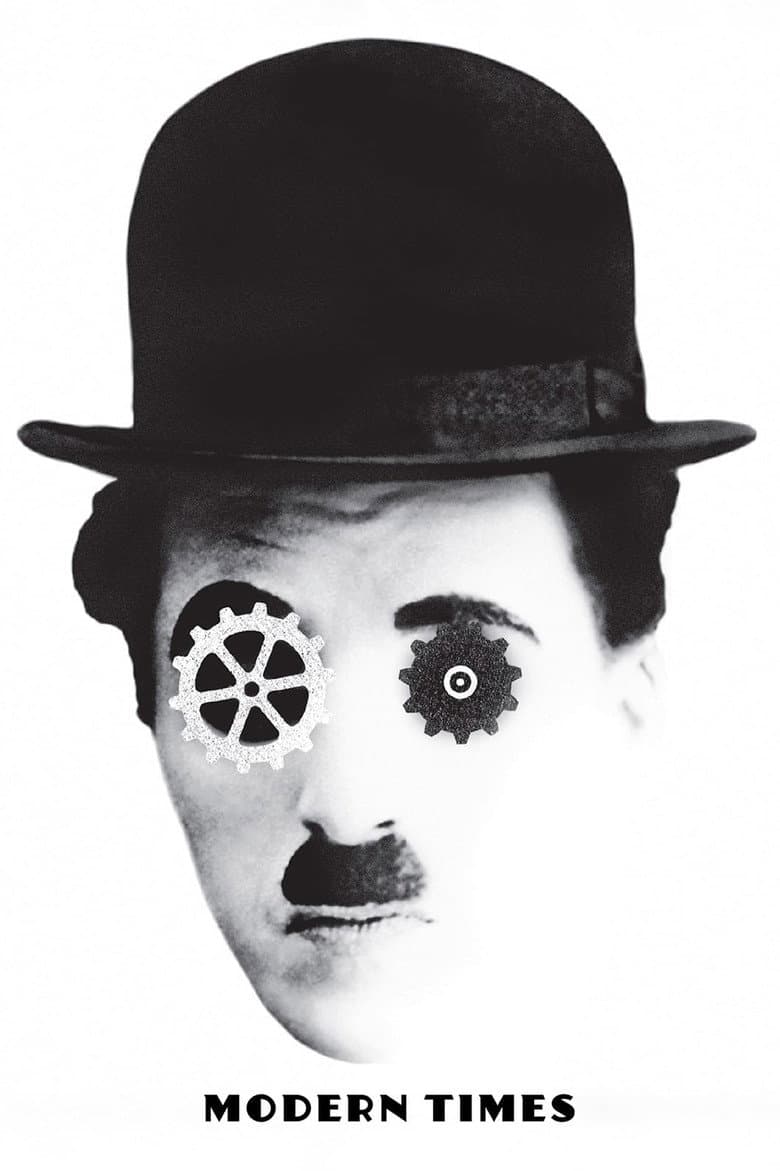
1936Charlie ChaplinMovie
Chaplin's goodbye to the Tramp is a loose string of set pieces, and the best of them are as precise as the machines they mock.
| Category | Critic | Users |
|---|---|---|
| Plot | Good | |
| Cinematography | Good | |
| Acting | Great | |
| Dialogue | Good | |
| Overall | Great |
Chaplin prepared Modern Times as his first talkie, wrote a dialogue script and threw it out. Until the café finale every voice comes out of a machine, a company president barking from a wall screen or a phonograph record selling a feeding machine, and when the Tramp finally sings, he loses the lyrics written on his cuff and improvises gibberish that sounds like French and Italian. It was the first time audiences heard his voice, saying nothing at all; a few title cards carry the rest.
The factory is the best stretch: arms that keep tightening bolts after the whistle, a feeding machine that spins a corncob into his teeth, the ride through the gears. Much of it was shot at silent speed, so the action runs frantic, and the blindfolded roller skating beside a drop that is only a matte painting still makes audiences flinch. Paulette Goddard gives him a partner with more spark than his earlier heroines, as Graham Greene noticed in 1936.
The New Yorker called it a rambling sketch, and it is, the plot restarting whenever Chaplin has a new gag. It barely matters. Goebbels banned it, Sartre and Beauvoir named a journal after it, and the Tramp's last walk down an open road earns its sentiment by promising nothing.
Modern Times at a glance
- Director
- Charlie Chaplin
- Runtime
- 87 min
- Release year
- 1936
What’s your grade?
Grade by category
No account needed. Sign in so your grades follow you and count once. · how vote integrity works
Comments
Plain text, 500 characters. Be sharp, not cruel.
No comments yet. Have the first take.