

Metropolis Review
1927Fritz LangMovie
The most influential images of the silent era, wrapped around a story so naive that Fritz Lang himself later called it silly.
| Category | Critic | Users |
|---|---|---|
| Plot | Average | |
| Cinematography | Exceptional | |
| Acting | Good | |
| Dialogue | Average | |
| Overall | Good |
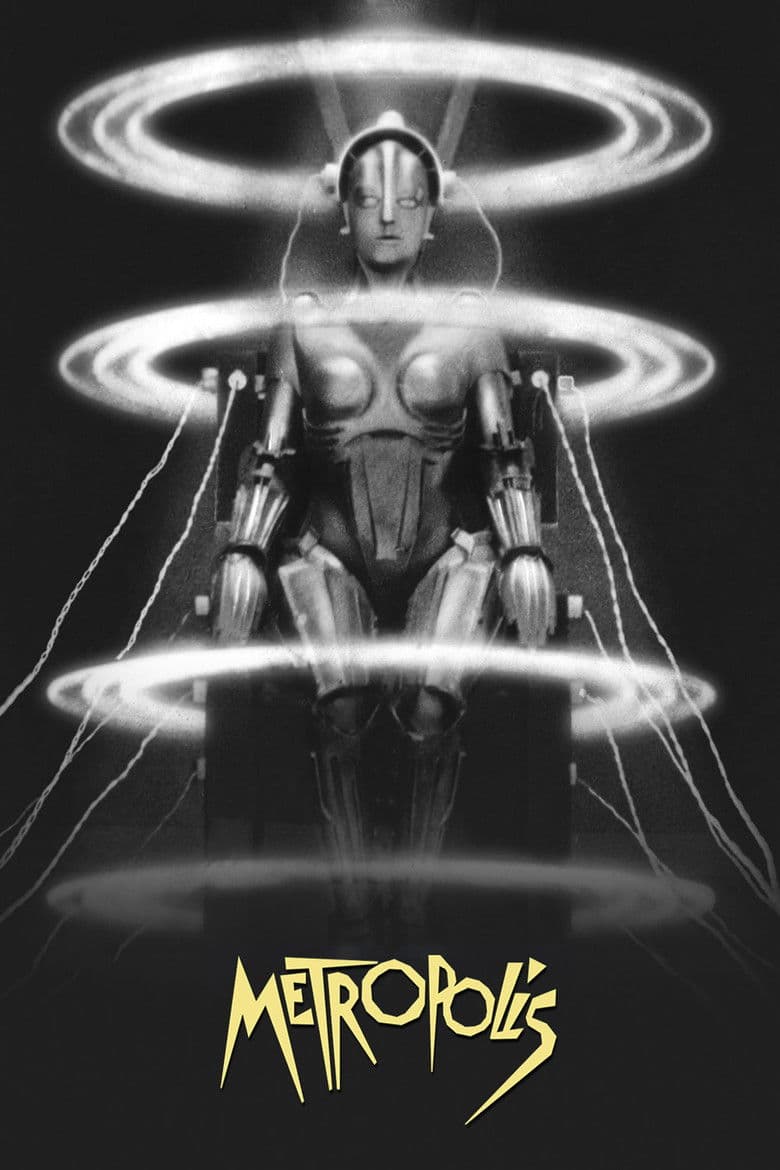
What lasts in Metropolis is the imagery, which has outlived almost everything else from the 1920s: towers stacked above aerial roadways, workers marching in shifts like pistons, a machine that turns into Moloch and swallows them, rings of light rising around a metal woman. Karl Freund and Günther Rittau shot it over 17 months, Eugen Schüfftan's mirrors put actors inside miniature sets, and the robot's design echoes as far away as C-3PO.
The story was the problem in 1927 and still is. Thea von Harbou's script reduces class war to a romance and a slogan about the heart mediating between head and hands, spelled out in a closing title card. H. G. Wells called it quite the silliest film, and Lang later told Peter Bogdanovich he had thought it silly and stupid. Brigitte Helm, in her first feature, carries the human scenes: her gentle Maria and her leering robot double are two different creatures.
The 2010 restoration, built around a battered 16mm copy of Lang's original cut found in Buenos Aires in 2008, recovers about 25 minutes and several subplots; two scenes beyond saving are summarized in title cards. It is the version to watch, and still a pageant with a greeting card inside, which is why the pictures take the top mark and the film does not.
Metropolis at a glance
- Director
- Fritz Lang
- Runtime
- 148 min
- Release year
- 1927
What’s your grade?
Grade by category
No account needed. Sign in so your grades follow you and count once. · how vote integrity works
Comments
Plain text, 500 characters. Be sharp, not cruel.
No comments yet. Have the first take.