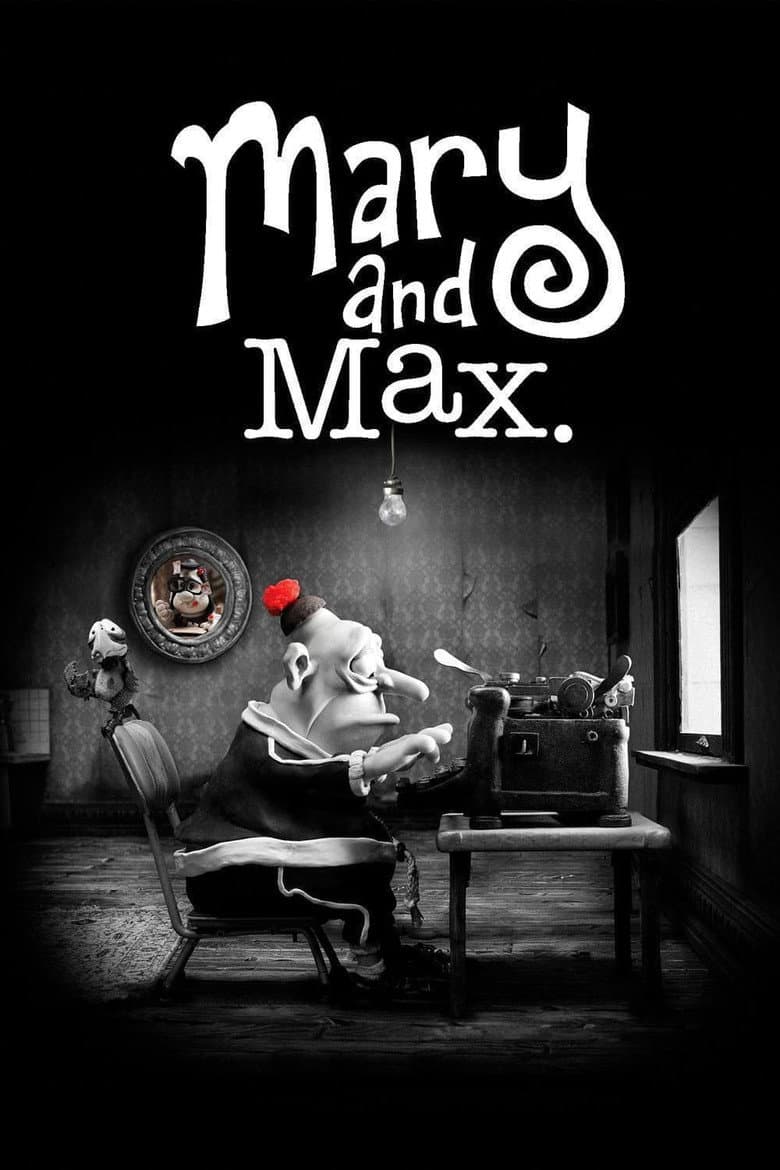
Mary and Max Review
2009Adam ElliotMovie
Adam Elliot's claymation pen-pal story is funnier and sadder than its look promises, even when the narration does too much of the work.
| Category | Critic | Users |
|---|---|---|
| Plot | Good | |
| Cinematography | Great | |
| Acting | Great | |
| Dialogue | Great | |
| Overall | Great |
Mary Daisy Dinkle is eight, lives in suburban Melbourne with a distant father and a sherry-drinking mother, and writes to a stranger she picks out of a New York phone book. Max Jerry Horowitz is 44, obese, anxious and, as the film later names it, has Asperger syndrome. Adam Elliot based him on a New York pen friend he had been writing to for over twenty years, and the letters, read aloud across the Pacific, are the film.
The design separates the two worlds by colour, Mary's suburb in sepia and browns and Max's Manhattan in black, white and grey, and the shoot took 57 weeks, with 133 sets and 212 puppets. Philip Seymour Hoffman gives Max a flat, precise voice full of hurt, Toni Collette plays the adult Mary, and Barry Humphries narrates much of it, which is both the film's charm and its crutch.
It is far darker than the clay suggests, taking in alcoholism, depression and a suicide attempt scored to Que Sera Sera, and the misery sometimes piles up faster than the storytelling can earn it. What holds it together is Elliot's dry wit and a final image that turns years of letters into a declaration. It opened the 2009 Sundance Film Festival and won the Cristal at Annecy.
Mary and Max at a glance
- Director
- Adam Elliot
- Runtime
- 90 min
- Release year
- 2009
What’s your grade?
Grade by category
No account needed. Sign in so your grades follow you and count once. · how vote integrity works
Comments
Plain text, 500 characters. Be sharp, not cruel.
No comments yet. Have the first take.