

Ikiru Review
1952Akira KurosawaMovie
Kurosawa cuts from a dying bureaucrat's awakening straight to his wake, and lets the mourners' drunken arguments deliver the verdict on his life.
| Category | Critic | Users |
|---|---|---|
| Plot | Great | |
| Cinematography | Great | |
| Acting | Exceptional | |
| Dialogue | Great | |
| Overall | Great |
Kurosawa opens on an X-ray of a stomach while a narrator explains that its owner has cancer and does not know it yet, so the film is about judgment, not suspense. Takashi Shimura's Kanji Watanabe has spent thirty years at city hall passing petitions from desk to desk, and a group of mothers asking for a drained cesspool to become a playground gets the full runaround. His first response is a night of Tokyo bars with a novelist as guide, and it ends with him singing Gondola no Uta in a voice so broken the revelers fall still.
Then comes Hideo Oguni's structural gamble. As Watanabe hurries out of a cafe, purpose found, young women at a party break into Happy Birthday for a friend, and Kurosawa lets the song land as his rebirth. The film then jumps to his wake, where colleagues drink and reconstruct, in flashbacks, how a nobody bullied a playground into existence. The drunker they get, the nearer they come to the truth.
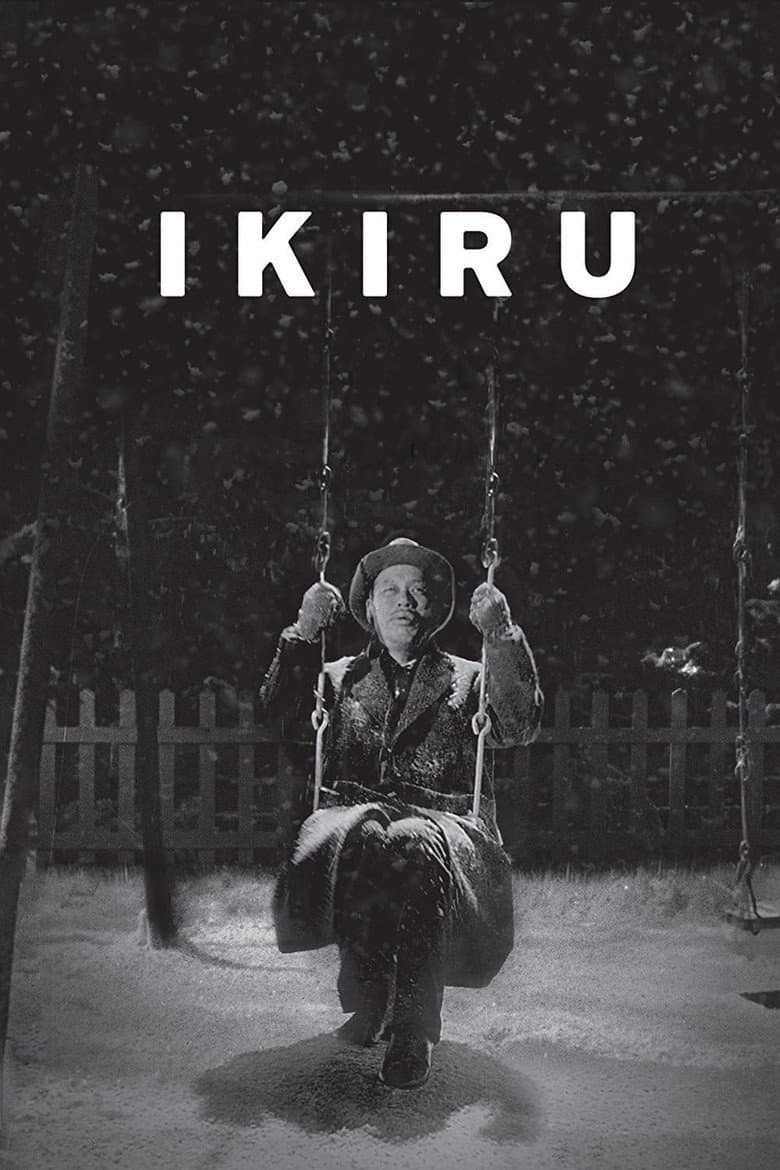
Shimura works through a hunched posture and a strangled, apologetic voice. Bosley Crowther felt the film lost its hold once its hero was gone; Roger Ebert later called it Kurosawa's greatest film. The wake does run long, but the image of Watanabe on a swing in falling snow earns it.
Ikiru at a glance
- Director
- Akira Kurosawa
- Runtime
- 143 min
- Release year
- 1952
What’s your grade?
Grade by category
No account needed. Sign in so your grades follow you and count once. · how vote integrity works
Comments
Plain text, 500 characters. Be sharp, not cruel.
No comments yet. Have the first take.