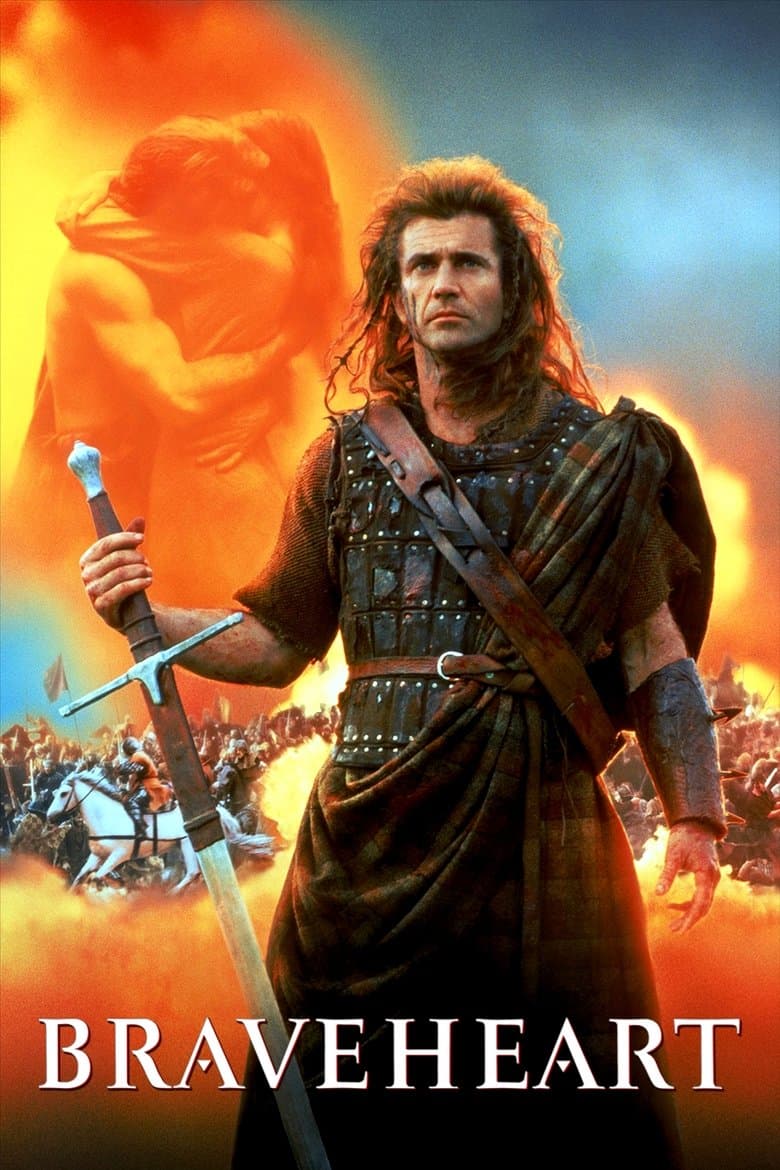
Braveheart Review
1995Mel GibsonMovie
A rousing battle epic that historians treat as a punchline, and the battles are still the best part of it.
| Category | Critic | Users |
|---|---|---|
| Plot | Average | |
| Cinematography | Good | |
| Acting | Good | |
| Dialogue | Average | |
| Overall | Good |
The battle scenes are why this won Best Picture and they hold up. Mel Gibson stages Stirling with real crowds, real mud and a camera down at shin level, and the charge carries a physical impact that later digital armies never manage. John Toll shoots the Highlands so well that Scotland put the film on tourism posters. Everything around the fighting is shakier. The script runs three hours and spends a great deal of it on a romance with a French princess who was a child at the time, the politics of the Scottish nobility flatten into simple treachery, and the title itself belongs to a different man entirely.
Historians have spent thirty years listing the errors, from the woad to the kilts to the bridge missing from the Battle of Stirling Bridge, and the objection is not pedantry, because the picture asks for credit as a true story. Gibson is a better director here than an actor, though he plays the grief cleanly, and Patrick McGoohan gives Longshanks a dry cruelty that is the strongest performance in the film.
Sophie Marceau is stranded by the writing, and the speeches are pitched for a trailer rather than a scene. The aggregate consensus sits at the low end of generally favorable, and that is the honest place for it: a stirring, overlong, historically reckless epic that knows exactly which three sequences the audience came for and delivers them.
Braveheart at a glance
- Director
- Mel Gibson
- Runtime
- 178 min
- Rating
- R
- Release year
- 1995
What’s your grade?
Grade by category
No account needed. Sign in so your grades follow you and count once. · how vote integrity works
Comments
Plain text, 500 characters. Be sharp, not cruel.
No comments yet. Have the first take.