Amadeus Review
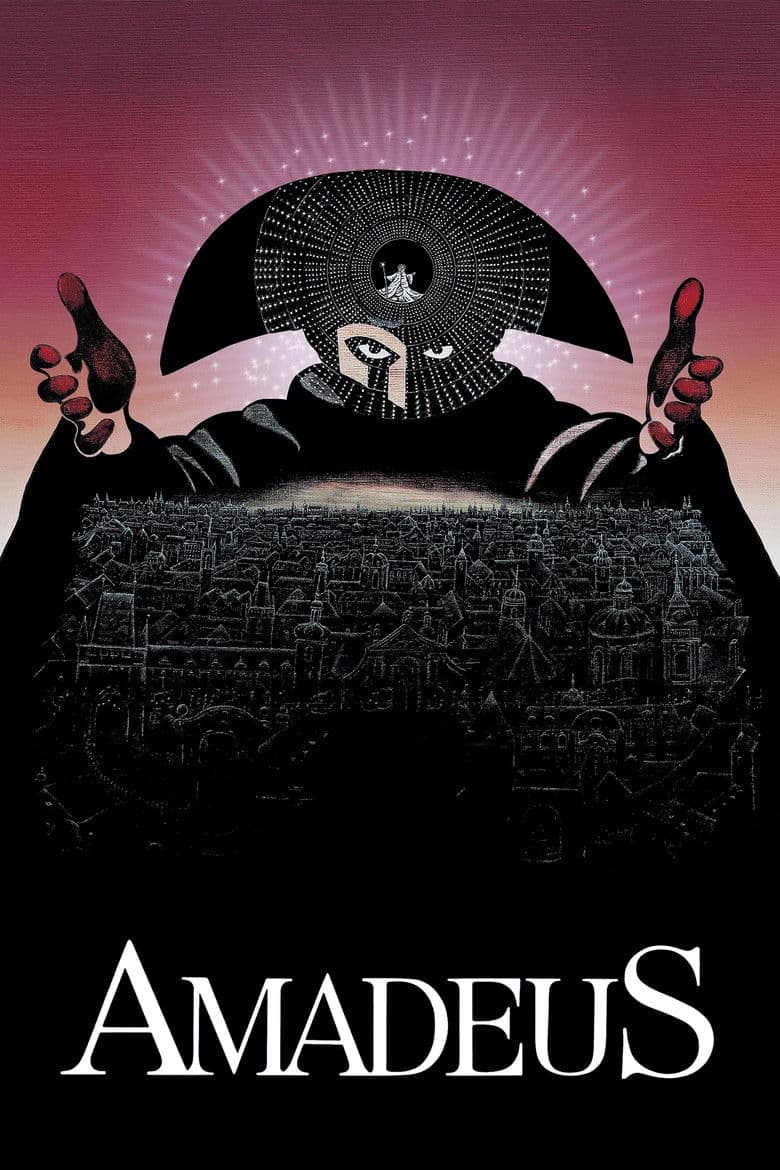
1984Milos FormanMovie
A mediocrity's confession dressed as a costume picture, and the most entertaining film ever made about envy.
| Category | Critic | Users |
|---|---|---|
| Plot | Great | |
| Cinematography | Great | |
| Acting | Great | |
| Dialogue | Great | |
| Overall | Great |
Peter Shaffer adapts his own stage play and throws out most of it, which is why the film moves like a thriller instead of a debate. The invention that carries everything is the point of view. Salieri narrates, so Mozart arrives already framed by a hostile witness, and the audience hears the music through the ears of the one man in Vienna equipped to understand exactly how good it is. F. Murray Abraham plays the old man in the asylum and the courtier in his prime as two creatures with the same wound, and the performance is why the film outlasts its genre.
Tom Hulce takes the bigger risk, since the giggle is a gamble that could have sunk the picture, and he grounds it by showing the composer at work, hunched over paper with no charm left. Milos Forman shoots in Prague and uses real theaters, which gives the opera sequences a physical weight no soundstage would supply, and Miroslav Ondricek lights the candlelit interiors so that the court looks both gorgeous and airless.
The famous complaint is that almost none of this happened, that the historical Salieri was a respected teacher rather than a murderer, and the film is unbothered because it never claims to be history. What it claims is that talent is handed out without regard to virtue, and that recognizing this is its own punishment. Critics rank it among the strongest Best Picture winners and the acclaim has not softened in forty years.
Amadeus at a glance
- Director
- Milos Forman
- Runtime
- 160 min
- Rating
- R
- Release year
- 1984
What’s your grade?
Grade by category
No account needed. Sign in so your grades follow you and count once. · how vote integrity works
Comments
Plain text, 500 characters. Be sharp, not cruel.
No comments yet. Have the first take.