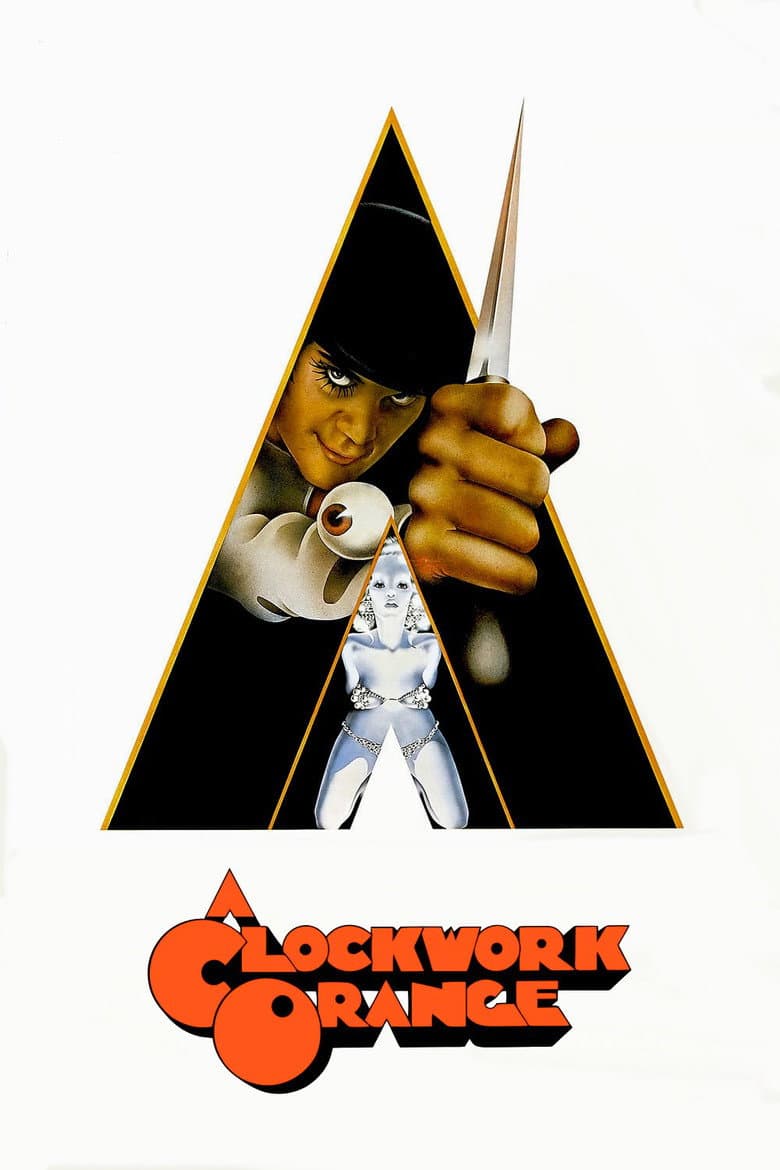
A Clockwork Orange Review
1971Stanley KubrickMovie
An invented slang, a monstrous narrator you follow anyway, and a director who withdrew his own film.
| Category | Critic | Users |
|---|---|---|
| Plot | Great | |
| Cinematography | Great | |
| Acting | Great | |
| Dialogue | Exceptional | |
| Overall | Great |
Nadsat is the achievement. Burgess invented a Russian inflected teenage argot so that readers would have to learn a language before they could enjoy the violence, and Kubrick keeps it whole, letting Malcolm McDowell narrate atrocities in a private vocabulary that seduces you into his company before you notice. McDowell's Alex is one of cinema's genuinely dangerous performances, gleeful and childlike and completely without floor. John Alcott's wide angle interiors, the milk bar, the Korova statues, the writer's house, are as designed as any sets in the medium.
The argument, that a man forced into goodness is no longer a man, is delivered with real force in the Ludovico sequence. The trouble is the first half. Kubrick shoots the assault at the writer's house with a staged theatricality that has invited forty years of the accusation that the film enjoys what it condemns, and the sped up bedroom scene is a misjudgement. After copycat claims and threats, Kubrick pulled it from Britain, where it stayed unavailable until after his death.
A Clockwork Orange at a glance
Official site- Director
- Stanley Kubrick
- Runtime
- 136 min
- Rating
- R
- Release year
- 1971
What’s your grade?
Grade by category
No account needed. Sign in so your grades follow you and count once. · how vote integrity works
Comments
Plain text, 500 characters. Be sharp, not cruel.
No comments yet. Have the first take.