
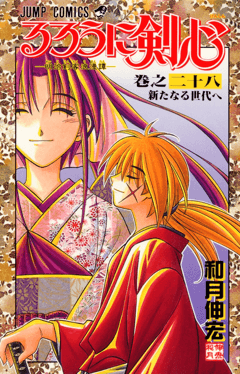
Rurouni Kenshin Review
1994Manga
The wandering swordsman who will not kill, carried by the best fight staging in nineties Jump.
| Category | Critic | Users |
|---|---|---|
| Story | Good | |
| Art | Great | |
| Characters | Great | |
| World-building | Good | |
| Overall | Great |
Watsuki pulls the samurai story out of the feudal period and drops it into the 1870s, when swords are being outlawed and the men who killed for the new government are learning that nobody wants them around. Kenshin's reversed blade is a gimmick that pays for itself, because a hero who has sworn off killing has to win by being faster and cleverer than opponents who have not, and Watsuki stages those fights better than almost anyone in the magazine at the time.
The panel to panel geometry is clean, the techniques are named and explained so a reader can follow the logic of a duel, and the character designs are still being borrowed by people who have never read it. Consensus splits the run in half. The Kyoto arc is the peak and is regularly cited among the best long arcs in shonen, largely because Shishio is a villain whose politics genuinely argue with the hero's rather than simply threatening him.
The closing Jinchu arc is thinner and visibly rushed, the early volumes lean on episodic filler, and any supporting character who is not Saito or Sanosuke tends to stand at the edge of the panel. The history is atmosphere rather than research. What holds up is the swordplay, the moral argument at the center of it, and a lead whose gentleness reads as discipline instead of softness.
Rurouni Kenshin at a glance
- Author
- Nobuhiro Watsuki
- Serialization start
- 1994
- Volumes
- 28
- Status
- Complete
What’s your grade?
Grade by category
No account needed. Sign in so your grades follow you and count once. · how vote integrity works
Comments
Plain text, 500 characters. Be sharp, not cruel.
No comments yet. Have the first take.