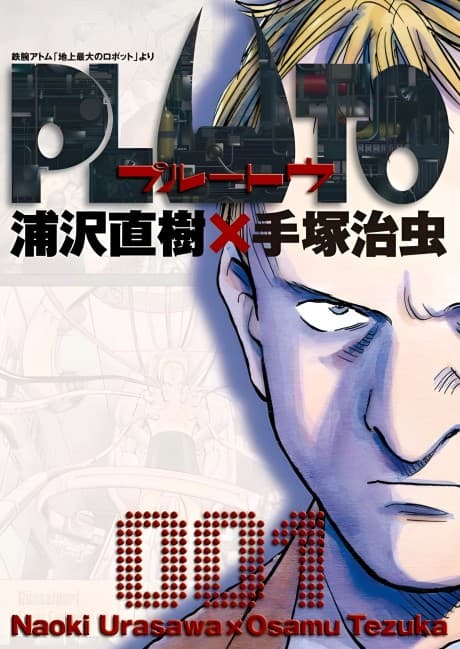
Pluto Review
2003Manga
Urasawa rebuilds a forty page Tezuka story as an eight volume murder investigation and loses nothing.
| Category | Critic | Users |
|---|---|---|
| Story | Exceptional | |
| Art | Exceptional | |
| Characters | Great | |
| World-building | Great | |
| Overall | Exceptional |
Taking apart The Greatest Robot on Earth and rebuilding it as a procedural was a genuinely risky idea, because the original was a boy's adventure about a fight. Urasawa keeps the seven robots and the order of their deaths and throws out the framing. Gesicht is a Europol inspector with a wife, a private grief and gaps in his own memory, and the investigation moves through interviews rather than battles. The war that precedes the story is the book's real subject, and the parallels to a specific invasion conducted on a false pretext are neither subtle nor meant to be.
What the compression buys is that eight volumes is exactly the right length. Nothing sags the way the middle of a longer Urasawa run does, and every robot gets a full chapter of life before it is taken apart. Astro is handled with unusual care, present but never centred. The art is the cleanest work of Urasawa's career, and the quiet pages, a robot playing piano badly or a butler tending a garden, do more damage than any of the violence.
Pluto at a glance
Official site- Author
- Naoki Urasawa
- Serialization start
- 2003
- Volumes
- 8
- Status
- Complete
What’s your grade?
Grade by category
No account needed. Sign in so your grades follow you and count once. · how vote integrity works
Comments
Plain text, 500 characters. Be sharp, not cruel.
No comments yet. Have the first take.