Gachiakuta Review
2022Manga
Urana draws rubbish with more attention than most artists give a hero, and the world underneath it holds up.
| Category | Critic | Users |
|---|---|---|
| Story | Good | |
| Art | Great | |
| Characters | Good | |
| World-building | Exceptional | |
| Overall | Great |
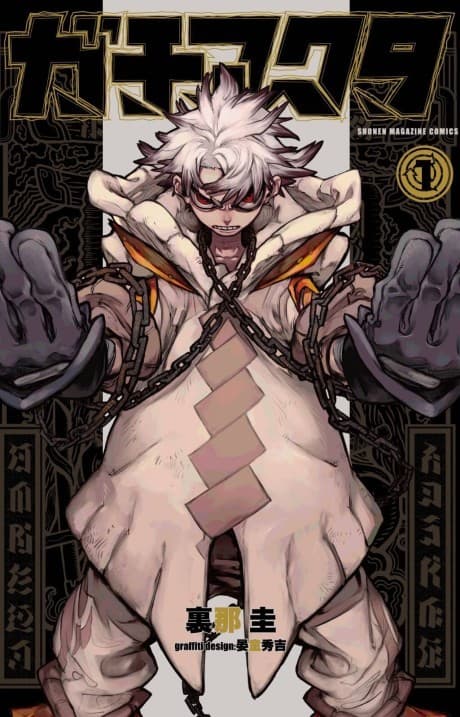
The Sphere floats above a pit and drops its rubbish into it. Rudo lives in the slum district reserved for the descendants of criminals, is framed for his guardian's murder and is thrown down with the rest of the waste, which is where he learns that objects people loved keep working. A Vital Instrument is an ordinary thing, a glove, a bat, a hairpin, charged by the attachment its owner poured into it, and the Cleaners fight with them against beasts grown out of discarded feeling.
Urana makes the whole book look like a landfill in the best sense. Pages are packed with debris drawn piece by piece rather than hatched in, graffiti by Hideyoshi Ando sits in the backgrounds as real lettering, and the character designs are stitched from junk with a costume logic that holds. Very few current shonen have a visual identity this specific.
The plot itself is a straightforward revenge and belonging story, and the beats are familiar: a found team, a tournament structure, a mentor with a secret. What lifts it is that the metaphor never slips, because everything here runs on what people throw away, including the people. Nineteen volumes in, and the Kodansha Manga Award it took this year was earned.
Gachiakuta at a glance
- Author
- Kei Urana
- Serialization start
- 2022
- Volumes
- 19
- Status
- Ongoing
What’s your grade?
Grade by category
No account needed. Sign in so your grades follow you and count once. · how vote integrity works
Comments
Plain text, 500 characters. Be sharp, not cruel.
No comments yet. Have the first take.