
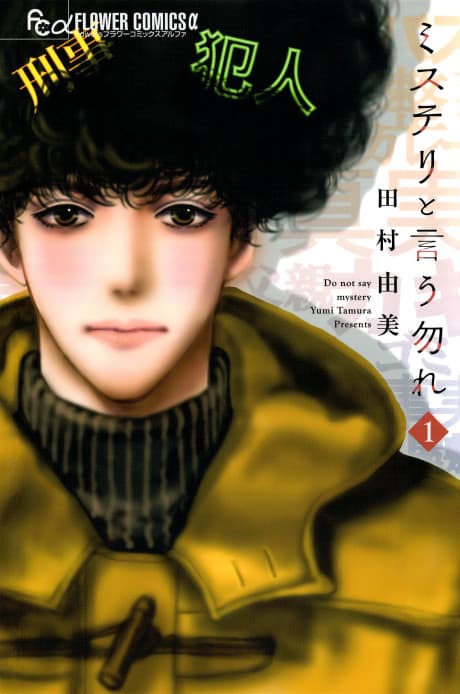
Don't Call It Mystery Review
2017Manga
Tamura replaced the detective with a talker, and the talking is better than most mysteries manage as a solution.
| Category | Critic | Users |
|---|---|---|
| Story | Great | |
| Art | Good | |
| Characters | Great | |
| World-building | Average | |
| Overall | Great |
The opening is a frame. Detectives arrive at Totono Kuno's flat over a classmate's murder, and instead of protesting his innocence he starts asking them questions: about their children, their marriages, the assumptions they carry to work. By the end of the arrest he has solved the case and rearranged one officer's life, and that becomes the shape of the series. Kuno does not chase anybody. He sits in a chair, or on a hijacked bus, and talks until people say the thing they have spent years avoiding.
Tamura spent decades on long adventure serials and uses none of that momentum here. Pages are dense with speech, panels hold on faces, and cases resolve because somebody admits a motive rather than because a clue turns up. It works because the observations are sharp and frequently uncomfortable: about who is asked to do the housework, what schools actually reward, and the stories families agree to tell. The Shogakukan Manga Award in 2022 was for the writing, and the writing is plainly the thing.
The art is plain beside it, clean josei linework with little to look at past expression, and the Totomura family plot moves at a crawl across sixteen volumes. A reader who wants puzzles will find lectures. A reader who wants the lectures will find very few equals.
Don't Call It Mystery at a glance
- Author
- Yumi Tamura
- Serialization start
- 2017
- Volumes
- 16
- Status
- Ongoing
What’s your grade?
Grade by category
No account needed. Sign in so your grades follow you and count once. · how vote integrity works
Comments
Plain text, 500 characters. Be sharp, not cruel.
No comments yet. Have the first take.